
Introduction to China Colourful Mountains
When people first hear the phrase “china colourful mountains,” they often imagine digitally enhanced photographs or cleverly filtered travel posts. But the truth is far more extraordinary. China is home to naturally occurring rainbow-like mountain formations that look as if a painter spilled layers of red, orange, yellow, and blue across vast rolling hills. These landscapes are real, scientifically documented, and among the most visually striking geological wonders on Earth.
The most famous of these formations are located in Zhangye Danxia National Geological Park in Gansu Province. This region has become synonymous with the term “china colourful mountains,” attracting photographers, geologists, nature enthusiasts, and curious travelers from around the globe. However, while Zhangye is the most iconic example, it is not the only place in China where vibrant geological layering can be found.
In this guide, we will explore the science behind these multicolored formations, their geological history, how they were formed over millions of years, cultural connections, travel tips, conservation efforts, and why they continue to fascinate both experts and visitors alike. By the end, you will not only understand what makes china colourful mountains so unique, but you will also appreciate the immense geological timeline that created them.
What Are China Colourful Mountains?
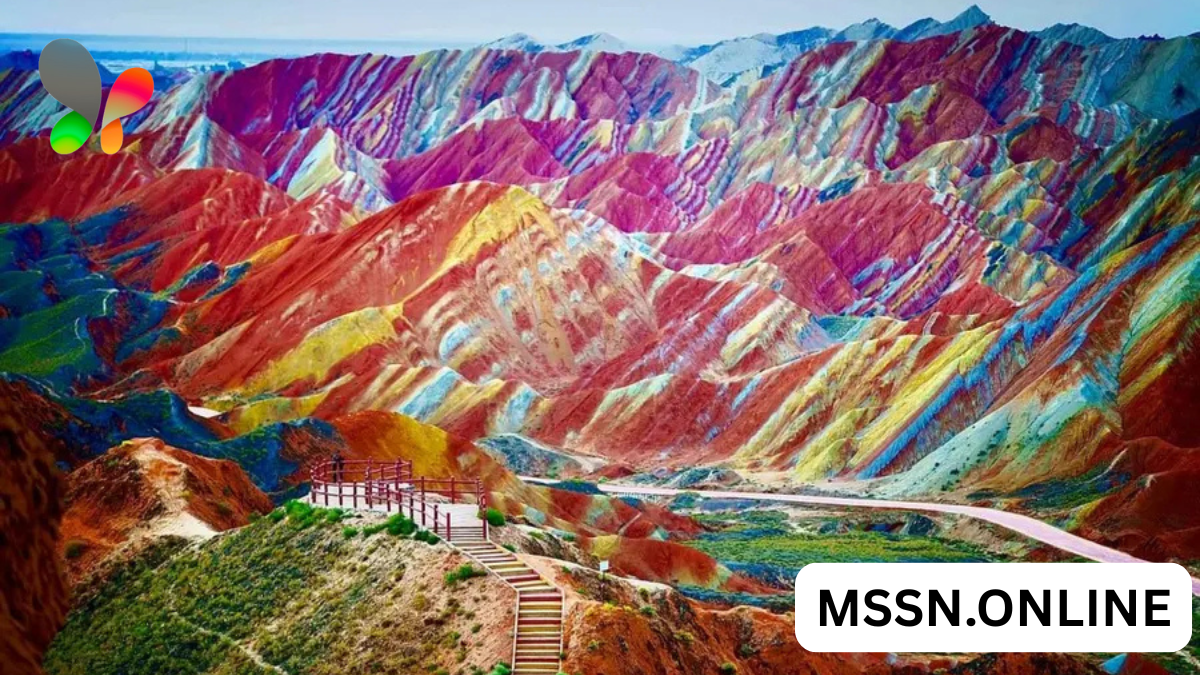
The term “china colourful mountains” generally refers to the Danxia landform formations, which are characterized by steep cliffs, layered sedimentary rocks, and intense color variations. These formations are created primarily from red sandstone and other minerals that have been compressed and uplifted over millions of years. The result is a layered effect that resembles brush strokes of natural pigment.
Unlike volcanic rainbow mountains found elsewhere in the world, China’s colourful mountains are sedimentary in origin. That means they were formed by layers of sand, silt, and minerals deposited over long periods, later shaped by tectonic activity and erosion. The different colors come from varying mineral compositions. Iron oxide produces red tones, limonite can create yellows and browns, while other minerals introduce greens and subtle blues.
What makes these mountains particularly remarkable is the clarity of the layering. In many areas, the stripes appear almost painted, running across hills and ridges in smooth, flowing bands. When sunlight hits them at sunrise or sunset, the colors intensify dramatically, creating a surreal landscape that feels almost otherworldly.
The Geological History Behind the Colors
Understanding china colourful mountains requires stepping back millions of years. The story begins in the Cretaceous period, roughly 100 million years ago, when the region that is now Gansu Province was covered by lakes, rivers, and desert basins. Sediments accumulated layer by layer at the bottom of these ancient water bodies.
Over time, tectonic plate movements caused the region to uplift. The compression folded and tilted the sedimentary layers, exposing them to wind and water erosion. These natural forces sculpted the terrain into ridges, valleys, and dramatic cliffs. Because each sediment layer had a slightly different mineral composition, the erosion revealed contrasting bands of color.
Iron played a particularly important role. When iron-rich sediments were exposed to oxygen, they oxidized, producing vivid red and orange hues. Other minerals created yellow, brown, and even subtle green tones. The result was not random splashes of color but consistent, layered striping that followed the geological structure of the land.
Zhangye Danxia: The Heart of China Colourful Mountains
If there is one place that defines china colourful mountains, it is Zhangye Danxia. Located in northwestern China, this park covers hundreds of square kilometers and contains some of the most vibrant and well-preserved Danxia landforms in existence.
The mountains here display broad stripes of crimson, amber, gold, and cream stretching across rolling hills. Some formations resemble waves frozen in time, while others look like giant layered cakes rising from the desert floor. The visual impact is strongest during early morning and late afternoon, when angled sunlight deepens the tones and creates dramatic shadows.
The park is carefully managed, with elevated wooden walkways and viewing platforms designed to protect the fragile terrain. Visitors are not allowed to wander freely across the mountains, as even minor foot traffic can damage the delicate surface layers. This balance between accessibility and preservation has helped maintain the site’s beauty while accommodating tourism.
The Science of Mineral Pigmentation
The vibrant hues of china colourful mountains are not superficial. They are embedded within the rock itself. Different minerals contribute distinct colors:
Iron oxide produces red and rust tones.
Limonite creates yellow and brown shades.
Chlorite can introduce greenish hues.
Calcium carbonate forms light cream or white layers.
The layering occurs because sediment was deposited in varying environmental conditions. For example, a dry, oxygen-rich period might produce red iron-rich layers, while wetter conditions could create lighter sediment bands. Over time, these differences became locked into the geological record.
It is important to note that the colors are stable under natural conditions. However, they can fade or erode if disturbed excessively, which is why strict tourism guidelines exist in protected areas.
Climate and Erosion: Nature’s Sculptors
While mineral composition determines color, climate and erosion determine shape. The semi-arid climate of Gansu Province plays a critical role in preserving the mountains’ sharp contours. Heavy rainfall is relatively rare, which slows the rate of surface degradation.
Wind erosion has been particularly influential. Over thousands of years, wind has carved valleys between ridges, accentuating the striped appearance. Occasional rainfall further sculpts the slopes, smoothing some areas while creating dramatic gullies in others.
Because erosion is ongoing, the landscape is not static. Subtle changes continue to occur, meaning the china colourful mountains are always evolving. Some ridges may gradually soften, while new layers become exposed.
Cultural Significance and Local Heritage
Although the china colourful mountains are primarily known for their geological beauty, they also hold cultural significance. The region around Zhangye was historically part of the Silk Road trade network.
Local communities have long viewed the mountains as symbols of endurance and natural artistry. In traditional Chinese landscape philosophy, mountains represent strength, permanence, and harmony with nature. The vibrant Danxia formations amplify these symbolic qualities, appearing both powerful and delicately layered.
In recent years, the mountains have become a source of regional pride. Tourism has brought economic opportunities, and the site has gained international recognition as a geological treasure.
Comparison with Other Rainbow Mountains Worldwide
Many people compare china colourful mountains to other rainbow-like geological sites around the world. While similarities exist, there are key differences.
For example, Peru’s Rainbow Mountain is largely volcanic and influenced by mineral oxidation in high-altitude conditions. China’s Danxia formations, by contrast, are sedimentary and shaped primarily by tectonic uplift and erosion.
Another difference is scale. Zhangye’s colourful mountains extend across a vast area, creating sweeping panoramas rather than a single peak. The layering is also often more horizontally continuous, producing smoother, wave-like patterns.
Best Time to Visit China Colourful Mountains
Timing plays a crucial role in experiencing the mountains at their most vibrant. Early morning and late afternoon are widely considered the best times to visit. During these hours, the lower angle of sunlight enhances color contrast and creates dramatic shadows.
Spring and autumn are typically ideal seasons. Temperatures are moderate, and the skies are often clear. Summer can bring more tourists, while winter offers quieter conditions but colder weather.
Weather also affects color perception. After light rainfall, the rocks can appear more saturated, as moisture deepens the mineral tones.
Photography Tips for Capturing the Colors
Photographing china colourful mountains requires attention to light and composition. Wide-angle lenses are useful for capturing expansive panoramas, while telephoto lenses can isolate specific striped ridges.
Using a tripod during sunrise or sunset can help maintain clarity in lower light conditions. Polarizing filters can enhance contrast between sky and landscape. However, even simple photography can produce remarkable results due to the naturally vivid hues.
The most important element is patience. Waiting for the right light can transform an already beautiful scene into something extraordinary.
Conservation and Environmental Protection
The popularity of china colourful mountains has raised concerns about environmental preservation. The fragile sedimentary layers are susceptible to erosion if walked upon. Even small disturbances can leave marks that last for decades.
To address this, authorities have implemented strict conservation measures. Elevated boardwalks guide visitors through designated viewing areas. Access to certain zones is restricted. Educational signage informs tourists about the importance of preservation.
These efforts reflect a broader commitment to protecting geological heritage sites in China. Sustainable tourism practices ensure that future generations can experience the mountains in their full brilliance.
The Broader Danxia Landform Network
Zhangye Danxia is part of a wider network of Danxia landforms across China. These formations can be found in several provinces, each with distinct characteristics. While not all display the same intense rainbow striping, many feature red sandstone cliffs and dramatic erosional shapes.
This network demonstrates the diversity of sedimentary and tectonic processes across China’s vast landscape. It also highlights the importance of regional geological variation in creating unique natural wonders.
Exploring beyond Zhangye reveals that china colourful mountains are part of a much larger geological story that stretches across the country.
Why China Colourful Mountains Continue to Fascinate Experts
Geologists are drawn to china colourful mountains because they provide a visible cross-section of sedimentary history. Researchers can study layering patterns to understand ancient environmental conditions.
Climate scientists also examine erosion patterns to track long-term environmental changes. The mountains serve as a natural laboratory for understanding how sedimentary rocks respond to uplift and weathering.
Beyond scientific interest, the mountains captivate artists, writers, and travelers. The interplay of color and form evokes both intellectual curiosity and emotional awe.
Practical Travel Advice
Reaching Zhangye typically involves flying to major Chinese cities and then connecting by train or domestic flight. The park is well-developed for tourism, with shuttle buses transporting visitors between viewing platforms.
Comfortable walking shoes are recommended, as exploring the park involves moderate walking along boardwalks. Sun protection is essential due to strong sunlight at higher elevations.
Accommodation options range from local guesthouses to modern hotels in nearby cities. Planning ahead during peak seasons is advisable.
The Emotional Impact of Standing Among the Colors
Descriptions and photographs cannot fully capture the experience of standing before china colourful mountains. The scale, depth, and saturation of color create a sense of immersion that feels almost unreal.
Many visitors describe a feeling of perspective when viewing the mountains. The immense timescale required to create them contrasts sharply with the brevity of human life. This awareness often deepens appreciation for natural processes.
The mountains are not just visually impressive; they are emotionally resonant landscapes shaped by patience, pressure, and time.
The Future of China Colourful Mountains
As global awareness grows, tourism will likely continue to increase. The challenge lies in balancing accessibility with preservation. Advances in sustainable tourism infrastructure may help manage visitor impact.
Ongoing research may also uncover new insights into the geological history of the region. Improved dating techniques could refine our understanding of sediment deposition and uplift timing.
Ultimately, the china colourful mountains stand as a reminder of Earth’s dynamic nature. They are not static monuments but evolving formations shaped by natural forces.
Conclusion
China colourful mountains represent one of the most visually stunning geological phenomena on Earth. Formed through millions of years of sedimentation, tectonic uplift, and erosion, they display vibrant mineral bands that appear almost painted across sweeping landscapes. Centered around Zhangye Danxia in Gansu Province, these formations combine scientific significance with breathtaking beauty. Through careful conservation and responsible tourism, they continue to inspire awe while offering valuable insights into Earth’s geological history.
FAQs
What are china colourful mountains?
They are layered sedimentary formations in China known for their vibrant mineral-based color bands.
Where are the most famous china colourful mountains located?
The most famous examples are in Zhangye Danxia National Geological Park in Gansu Province.
Why are the mountains so colorful?
Different minerals such as iron oxide and limonite create red, yellow, and brown tones.
How old are the china colourful mountains?
They formed from sediments deposited over 100 million years ago and were later uplifted by tectonic activity.
Can visitors walk on the mountains?
No, visitors must stay on designated boardwalks to protect the fragile terrain.
When is the best time to see the colors clearly?
Sunrise and sunset offer the most dramatic and vibrant color displays.
Are there other colorful mountains in China besides Zhangye?
Yes, other Danxia landforms across China also display red sandstone formations.
Is the color natural or enhanced?
The colors are entirely natural and result from mineral composition and oxidation.
Why are conservation efforts important?
The sedimentary layers are fragile and can be permanently damaged by foot traffic.
Do the colors change over time?
Erosion gradually alters the landscape, but the mineral colors themselves remain stable under natural conditions.
Also read: Skweek Game Amstrad: A Complete Expert Guide to the Colorful 8-Bit Classic