
Introduction to the Epiphone Valve Jr
The epiphone valve jr is one of those rare guitar amplifiers that quietly changed the conversation about tube tone. At first glance, it looks almost too simple to take seriously. Five watts. One volume knob. No EQ section. No reverb. No fancy digital modeling. Yet over the years, this small, affordable amp has built a near-legendary reputation among beginners, gigging players, studio engineers, and boutique modders alike. That does not happen by accident. It happens when a product delivers something pure and essential.
When the Epiphone brand introduced the Valve Jr in the mid-2000s, the goal was simple: create a real, all-tube amplifier at a price point almost anyone could afford. At that time, many beginner amps were solid-state or digital. Tube amps were often expensive and intimidating. The Valve Jr came in and said, “Here’s real tube tone without the premium price.” That positioning alone was powerful.
Over time, the epiphone valve jr became more than just an entry-level amp. It turned into a platform. Players began swapping components, modifying circuits, and experimenting with cabinets. Online forums filled with discussions about resistor values and tone stack additions. In many ways, this humble amp sparked a DIY culture around affordable tube gear. And that is part of what makes it special.
Design Philosophy and Simplicity
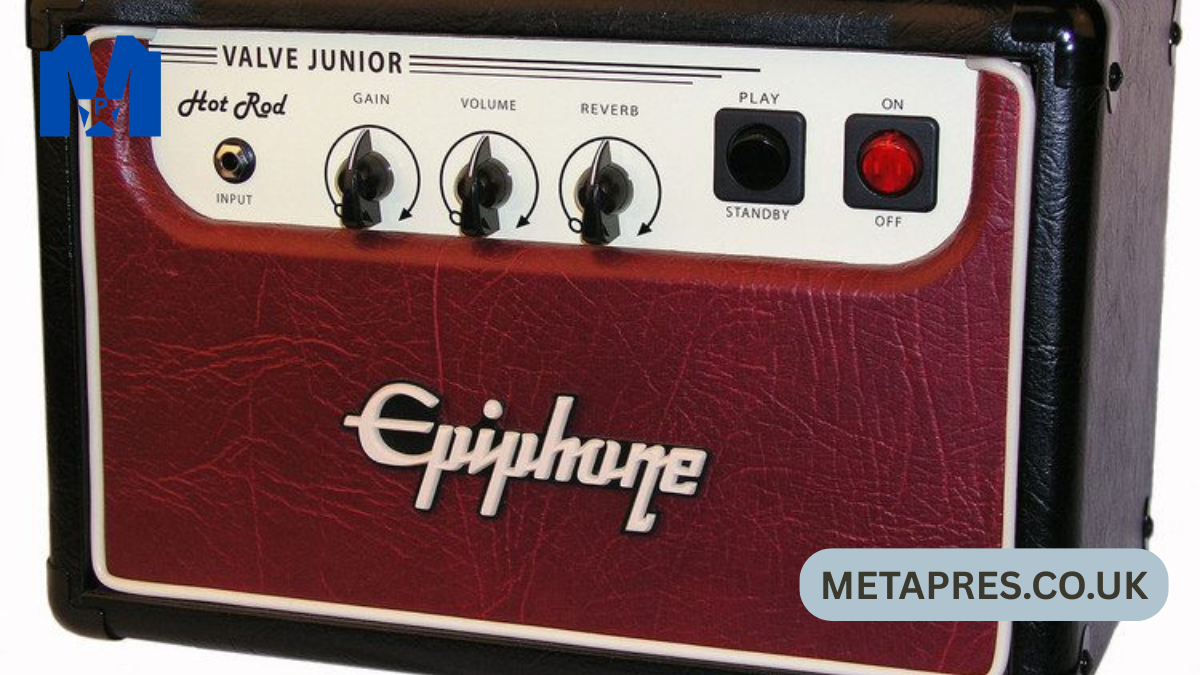
The most striking thing about the epiphone valve jr is its minimalism. One volume knob. That is it. There are no bass, mid, or treble controls. No gain knob separate from volume. No channel switching. The circuit is based around a single preamp tube and a single power tube. It is a stripped-down design that forces the player to focus on touch and guitar controls rather than amp tweaking.
This simplicity is not laziness. It is intentional. By removing the tone stack, the amp retains more raw signal and natural harmonic content. Many experienced players appreciate this because it keeps the tone direct and responsive. The dynamic interaction between pick attack and tube saturation becomes more obvious. You feel connected to the sound in a way that heavily processed amps sometimes dilute.
For beginners, the lack of controls can be liberating. You plug in, turn the knob, and play. There is no confusion about dialing in settings. For experienced players, it becomes a creative challenge. You use your guitar’s volume knob to clean up the sound. You experiment with pedals. You swap speakers. The amp becomes a blank canvas.
Tube Configuration and Technical Specifications
At its core, the epiphone valve jr is a five-watt, Class A tube amplifier. Most versions use a 12AX7 preamp tube and an EL84 power tube. This configuration is classic in small British-style amps and is known for its chime, midrange character, and smooth breakup.
Five watts might sound insignificant compared to 50- or 100-watt heads, but tube watts behave differently from solid-state watts. A five-watt tube amp can be surprisingly loud, especially when pushed into overdrive. In small rooms or studios, it is more than enough. Even in rehearsal spaces, mic’ing it through a PA solves volume concerns.
The amp has an 8-ohm speaker output, allowing you to connect it to various cabinets. The combo version includes its own speaker, while the head version is meant to be paired with an external cab. This flexibility has been a big reason for its popularity. Players quickly realized that changing the cabinet dramatically affects tone.
The Head vs Combo Debate
The epiphone valve jr was released in both head and combo formats. Each has its own appeal, and the choice often depends on how you plan to use the amp.
The head version is more flexible. You can pair it with a 1×12, 2×12, or even 4×12 cabinet. This allows you to experiment with different speakers and tonal responses. For players who already own cabinets, the head is a logical and economical choice. It is also easier to transport in separate pieces.
The combo version is more compact and convenient. It comes ready to play out of the box. For bedroom practice or quick jam sessions, you do not need to think about matching cabinets. However, some players feel the stock speaker in early combo versions was not the strongest point of the amp. Many upgraded the speaker and found a dramatic improvement in tone.
Ultimately, the head offers more tonal flexibility, while the combo provides simplicity. Both share the same core circuit and tonal identity.
Tone Characteristics and Sound Profile
The tonal character of the epiphone valve jr is often described as raw, warm, and responsive. At low volume settings, it delivers a clean tone that is slightly warm and mid-focused. It is not ultra-sparkly like some American-style amps. Instead, it leans toward a more British flavor due to the EL84 power tube.
As you turn up the volume, the amp transitions smoothly into overdrive. The breakup is natural and harmonically rich. It compresses in a pleasing way, especially when you dig into the strings. This makes it great for blues, classic rock, and garage-style tones. It is not designed for ultra-high-gain metal on its own, but it pairs well with distortion pedals if needed.
One of the strongest aspects of the Valve Jr is touch sensitivity. Because there is no complex tone stack shaping the sound, your playing dynamics become the main source of tonal variation. Roll back your guitar volume and it cleans up. Hit the strings harder and it snarls. That interactive quality is something many players crave.
The Modding Community and DIY Culture
Few affordable amplifiers have inspired as much modification as the epiphone valve jr. From adding tone controls to upgrading transformers, enthusiasts have treated it as a learning platform. Its simple circuit makes it easier to understand than more complex designs.
Common modifications include adding a tone stack, improving filtering for reduced hum, upgrading output transformers, and swapping capacitors. Some players even rewire the entire circuit into a different amp topology. The amp’s accessible price made it less intimidating to experiment on. If something went wrong, you were not risking a high-end boutique investment.
The modding culture around the Valve Jr has educational value. Many guitarists learned the basics of tube electronics by working on this amp. It became a gateway into amp building and boutique craftsmanship. That kind of legacy goes beyond simple tone.
Recording Applications
In studio settings, the epiphone valve jr shines. Engineers often prefer small tube amps because they can be driven into natural saturation at manageable volumes. A cranked five-watt amp can produce rich overdrive without overwhelming the room.
The Valve Jr records particularly well when paired with quality microphones and cabinets. A simple dynamic mic close to the speaker can capture its punchy midrange. Blending with a ribbon mic can add warmth and depth. Because the amp is not overly complex in its voicing, it sits well in a mix without excessive EQ adjustments.
Many players have used it for home recording setups. Its manageable volume and straightforward tone make it ideal for capturing authentic tube character without expensive studio gear. In that context, it continues to be relevant even years after its initial release.
Live Performance Considerations
While five watts may not seem stage-ready, the epiphone valve jr can work in live settings with proper mic’ing. In smaller venues, it may even provide enough volume on its own, especially when paired with an efficient speaker cabinet.
One advantage of low-wattage amps on stage is that you can push them harder. A 100-watt amp often needs to stay at low master volume levels, which limits power tube saturation. With the Valve Jr, you can turn it up and get natural overdrive without excessive loudness.
However, clean headroom is limited. If you need crystal-clean tones at high volume, this may not be the ideal amp. It excels when used as a driven, expressive tool rather than a pristine clean platform.
Speaker Pairings and Cabinet Choices
Changing the speaker can transform the epiphone valve jr dramatically. Pairing it with a high-quality 12-inch speaker often unlocks deeper bass and smoother highs. Vintage-style speakers emphasize warmth and midrange growl. More modern speakers can tighten the low end and add clarity.
A 1×12 cabinet is a popular match. It balances portability with tonal fullness. A 2×12 can add depth and projection, making the small amp sound much larger. Even a 4×12 can be used, though it may seem excessive. The point is that the amp’s simplicity allows the speaker choice to shape the final sound significantly.
Many players report that upgrading from the stock combo speaker to a premium aftermarket option was one of the best improvements they made. It demonstrates how much of an amplifier’s tone comes from the speaker itself.
Reliability and Build Quality
The epiphone valve jr was designed to be affordable, so it does not feature ultra-premium components. However, for its price range, it has proven reasonably reliable. The chassis is sturdy, and the basic circuit is straightforward, reducing points of failure.
Some early versions experienced hum issues, which many players addressed through simple modifications. Later revisions improved certain design elements. Regular tube maintenance, such as replacing worn tubes, keeps the amp performing optimally.
For many owners, the amp has lasted years without major problems. Considering its original cost, that level of durability is impressive.
Comparisons to Similar Low-Watt Tube Amps
The Valve Jr is often compared to other small tube amps from brands like Fender and Vox. While Fender-style small amps often emphasize sparkling cleans, and Vox-style amps highlight chime and articulation, the Valve Jr sits somewhere in between but leans toward British-style midrange due to the EL84.
Unlike many competitors, the Valve Jr strips away tone controls entirely. This makes it less versatile on paper but more pure in execution. Some players prefer having EQ options, while others appreciate the directness.
Its biggest competitive advantage has always been value. It delivered real tube tone at a price that was almost unheard of at the time. That democratization of tube sound gave it a unique place in the market.
Why the Epiphone Valve Jr Still Matters
Even though it is no longer the newest product on the market, the epiphone valve jr continues to hold relevance. Its combination of simplicity, affordability, and mod-friendly design makes it a timeless piece of gear. It represents an era when tube tone became accessible to a wider audience.
For beginners, it remains a fantastic introduction to tube amplification. For experienced players, it offers a platform for experimentation and raw expression. For modders, it is a playground of possibilities.
In a world increasingly dominated by digital modeling and feature-packed amplifiers, the Valve Jr stands as a reminder that sometimes less truly is more. One knob. Five watts. Real tubes. Pure interaction between player and circuit. That formula still resonates with guitarists today.
FAQs
What is the power rating of the epiphone valve jr?
It is a five-watt all-tube amplifier.
Does the epiphone valve jr have tone controls?
No, it features a single volume knob with no built-in EQ.
Is the epiphone valve jr good for recording?
Yes, its low wattage and natural tube breakup make it excellent for studio use.
Can you gig with the epiphone valve jr?
Yes, especially when mic’d through a PA system.
Why is the epiphone valve jr popular for mods?
Its simple circuit and affordable price make it ideal for customization.
Also read: Littlecote Hall: A Deep Dive into History, Architecture, Legends, and Modern Legacy