
Introduction to the Brighton Pier Fire
The story behind the Brighton Pier fire is one of heritage, decline, tragedy, and resilience. When people search for “brighton peir fire,” they are typically referring to the devastating blaze that destroyed the historic West Pier in 2003. Although many mistakenly associate the incident with Brighton Palace Pier, it was actually the West Pier that suffered catastrophic damage. Understanding this distinction is essential because the event permanently reshaped Brighton’s seafront and cultural identity.
Brighton, located in East Sussex on England’s southern coast, has long been one of Britain’s most famous seaside destinations. Its piers were central to its appeal. For decades, the West Pier and the Palace Pier stood as architectural and social landmarks. While the Palace Pier remains active and vibrant today, the West Pier’s destruction marked the end of an era.
The Brighton Pier fire was not a sudden isolated tragedy. It occurred after years of neglect, financial difficulty, and structural deterioration. By the time the fire broke out, the pier had already been closed to the public for decades. Yet despite its condition, it remained deeply symbolic. The blaze transformed a fragile but recognizable landmark into skeletal ruins, forever changing the skyline of Brighton.
The Origins of Brighton’s Pier Culture
Brighton rose to prominence in the late 18th and early 19th centuries, particularly after gaining royal patronage from the Prince Regent, who later became King George IV. Seaside tourism flourished during the Victorian era, and coastal towns across Britain began constructing elaborate piers as leisure destinations. These structures extended out into the sea, offering promenades, theatres, and entertainment venues suspended above the water.
Victorian engineering combined innovation with ornamental design. Piers were built not only for recreation but also as symbols of civic pride. Brighton embraced this movement enthusiastically. The town developed into a fashionable resort, drawing visitors from London and beyond. Rail connections made travel easier, and the seaside became synonymous with leisure and escape.
The pier was a key element of that experience. It offered panoramic sea views, fresh air, and social interaction. Over time, Brighton’s piers became architectural icons, embodying both industrial progress and coastal charm.
The West Pier: Rise, Glory, and Decline
The West Pier opened in 1866 and was designed by the renowned Victorian engineer Eugenius Birch. It quickly established itself as one of the most elegant piers in Britain. Its design featured delicate ironwork and ornate pavilions. A concert hall at the end of the pier became a cultural hub for performances and gatherings.
For decades, the West Pier thrived. It hosted concerts, theatrical productions, and social events. Families strolled along its deck, enjoying the sea breeze and entertainment. During its peak years, it was central to Brighton’s identity and economy.
However, after the Second World War, seaside tourism patterns began to change. Cheap foreign holidays became more accessible, and traditional British seaside resorts saw declining visitor numbers. Maintenance costs for the pier increased significantly, and revenue declined. By 1975, structural concerns forced its closure to the public. Although it received Grade I listed status in recognition of its historical importance, funding for restoration proved difficult to secure. Over time, storms, corrosion, and neglect accelerated its deterioration.
Brighton Palace Pier: The Surviving Landmark
The Brighton Palace Pier, opened in 1899, followed a slightly different trajectory. It successfully adapted to modern entertainment demands by introducing amusement rides, arcades, and family attractions. This evolution allowed it to remain commercially viable while retaining historical charm.
Unlike the West Pier, the Palace Pier benefited from ongoing investment and maintenance. It became Brighton’s primary seaside attraction, especially after the West Pier’s closure. Many visitors today mistakenly assume the 2003 fire damaged the Palace Pier, but it was not affected by the blaze.
The survival of the Palace Pier demonstrates how adaptation and consistent funding can preserve heritage structures. It continues to play a vital role in Brighton’s tourism industry and serves as a living reminder of the city’s Victorian roots.
Events Leading Up to the Fire
The West Pier’s vulnerability did not appear overnight. Years of exposure to harsh marine conditions weakened its structure. Saltwater corrosion attacked iron supports, and wooden decking deteriorated. Storms in the 1980s and 1990s caused sections to collapse into the sea.
Efforts to secure restoration funding faced bureaucratic and financial obstacles. Although preservation groups campaigned tirelessly, the cost of full restoration ran into millions of pounds. Ownership complications further complicated matters. As time passed, the pier became increasingly unstable and inaccessible.
By the early 2000s, the West Pier stood abandoned, fenced off, and structurally compromised. It was no longer a functional attraction but remained a powerful visual symbol of Brighton’s past. Unfortunately, its neglected condition also made it susceptible to damage and criminal activity.
The Brighton Pier Fire of 2003
In March 2003, a major fire broke out at the West Pier’s concert hall. The blaze spread rapidly, consuming much of the remaining wooden structure. Firefighters faced immense challenges. The pier’s unstable condition made direct access dangerous, and the offshore location limited firefighting capabilities.
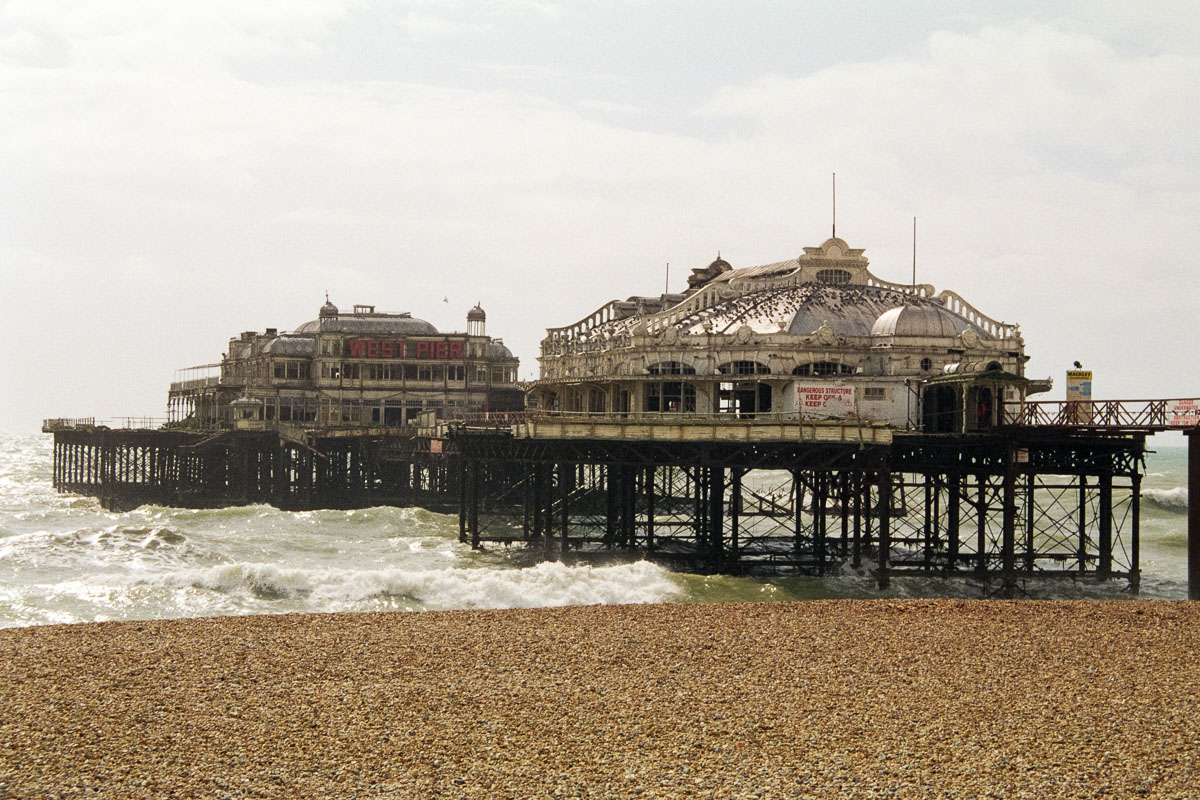
Authorities treated the fire as suspicious, with arson strongly suspected. Later that year, a second fire caused additional destruction. Together, these incidents eliminated any realistic chance of full restoration. What had once been an ornate Victorian landmark was reduced to charred metal skeletons rising from the sea.
The sight of the pier engulfed in flames shocked residents and attracted national media attention. For many, it felt like witnessing the final chapter of a long decline. The fire symbolized not only physical destruction but also the irreversible loss of heritage.
Immediate Aftermath and Public Reaction
In the aftermath, Brighton experienced a mix of grief and frustration. Many locals had hoped the West Pier would one day be restored. Seeing it burn confirmed fears that restoration efforts had come too late. Campaigners argued that earlier intervention might have prevented such a catastrophic outcome.
Safety concerns prevented extensive salvage operations. Engineers determined that rebuilding from the damaged remains would require enormous investment. The cost was considered prohibitive, especially given the pier’s already weakened state before the fire.
The media coverage brought attention to broader issues of heritage funding and preservation. The tragedy sparked national conversations about the vulnerability of historic structures, particularly those exposed to harsh environmental conditions.
Cultural and Economic Impact
The Brighton Pier fire altered the city’s visual and cultural landscape. For generations, the two piers had framed the seafront. After 2003, only the Palace Pier remained operational. The absence of the West Pier created a noticeable gap in the skyline.
Initially, there were concerns about tourism decline. However, Brighton demonstrated resilience. The ruins themselves became a haunting attraction. Photographers, artists, and filmmakers began using the skeletal remains as dramatic backdrops. The pier’s destruction paradoxically gave it a new identity as a romantic ruin.
Economically, Brighton continued to thrive. Festivals, arts events, and creative industries strengthened the city’s reputation as a vibrant cultural hub. While the West Pier was gone as a functioning attraction, its story became part of Brighton’s narrative appeal.
The West Pier Today
Today, the remains of the West Pier still stand offshore, though in a severely deteriorated state. They are inaccessible to the public for safety reasons. The structure is periodically assessed to ensure that it does not pose navigational or environmental hazards.
Rather than attempting full reconstruction, preservation efforts focus on managing the remains responsibly. The skeletal iron framework has become symbolic of impermanence and nostalgia. It represents both the grandeur of Victorian engineering and the consequences of neglect.
For many residents, the ruins are bittersweet. They serve as a reminder of Brighton’s rich history while highlighting the challenges of maintaining coastal heritage sites. Over time, the image of the ruined pier has become deeply embedded in the city’s identity.
Lessons from the Brighton Pier Fire
The Brighton Pier fire offers important lessons about heritage preservation. Coastal structures face unique environmental pressures, including salt corrosion, storms, and fluctuating tides. Regular maintenance and proactive funding are essential to prevent irreversible decline.
The incident also underscores the risks posed by abandoned properties. Unused structures can become targets for vandalism or arson. Effective security and monitoring are critical in safeguarding heritage sites.
Most importantly, the fire demonstrates that preservation requires timely action. Waiting too long can result in loss beyond repair. The West Pier’s story continues to inform policy discussions about how best to protect historical landmarks across the United Kingdom.
Conclusion
The Brighton Pier fire marked the tragic end of the West Pier as a functioning landmark, but it did not erase its legacy. Instead, it transformed the structure into a powerful symbol of memory, resilience, and change. The event reshaped Brighton’s skyline and sparked renewed awareness about heritage preservation.
While the Palace Pier remains a lively attraction, the skeletal remains of the West Pier stand as a silent reminder of what once was. The fire may have destroyed the physical structure, but it reinforced the importance of safeguarding cultural history for future generations.
The story of the Brighton Pier fire continues to resonate because it combines architectural beauty, economic challenges, community identity, and irreversible loss. It reminds us that heritage is fragile and that preserving it requires sustained commitment and foresight.
FAQs
When did the Brighton Pier fire happen?
The main fire occurred in March 2003, followed by a second blaze later that same year.
Which pier burned in Brighton?
The fire destroyed the historic West Pier, not the Brighton Palace Pier.
Was the Brighton Pier fire accidental?
Authorities suspected arson, but no definitive convictions were secured.
Is Brighton Palace Pier still open?
Yes, Brighton Palace Pier remains fully operational and open to visitors.
Can visitors access the West Pier ruins?
No, the remains are unsafe and closed to the public.