
Introduction to HMS Bronington
HMS Bronington is a name that holds a special place in British naval history. Known for its service as a minesweeper in the Royal Navy, the ship represents a period when naval warfare relied heavily on specialized vessels designed to protect fleets and shipping routes from underwater threats. Even today, historians, naval enthusiasts, and maritime preservationists continue to discuss the importance of this vessel and the role it played during its operational years.
The ship is widely recognized not only for its military purpose but also for its unique connection to historical figures and its later life as a preserved naval vessel. Minesweepers like HMS Bronington were critical to naval strategy because sea mines posed a serious threat to both military and commercial vessels. Clearing these mines required skill, precision, and highly specialized equipment, which ships like Bronington were designed to carry.
Understanding HMS Bronington involves more than just examining its construction and service record. It also requires exploring the broader historical context of naval warfare during the mid-20th century. The ship was built during a time when navies around the world were adapting to new threats and technologies, and minesweeping became a vital part of maritime defense strategies.
The Historical Background of Royal Navy Minesweepers

To fully appreciate HMS Bronington, it is important to understand the role of minesweepers in naval operations. During the early and mid-20th century, sea mines became one of the most dangerous weapons used in naval warfare. These explosive devices were placed underwater to damage or sink ships, often blocking key shipping routes and naval ports.
The Royal Navy invested heavily in minesweeping vessels to counter this threat. Minesweepers were specially designed ships equipped with tools and technologies to locate, trigger, and remove underwater mines. Their work was extremely dangerous, as they often had to operate in areas where mines were densely deployed. Crews had to maintain a high level of skill and discipline while performing these operations.
By the time HMS Bronington was built, minesweeping technology had advanced significantly. New classes of ships were designed with materials that minimized magnetic signatures, reducing the risk of triggering magnetic mines. This innovation played a major role in improving the safety and effectiveness of minesweeping missions.
Construction and Design of HMS Bronington
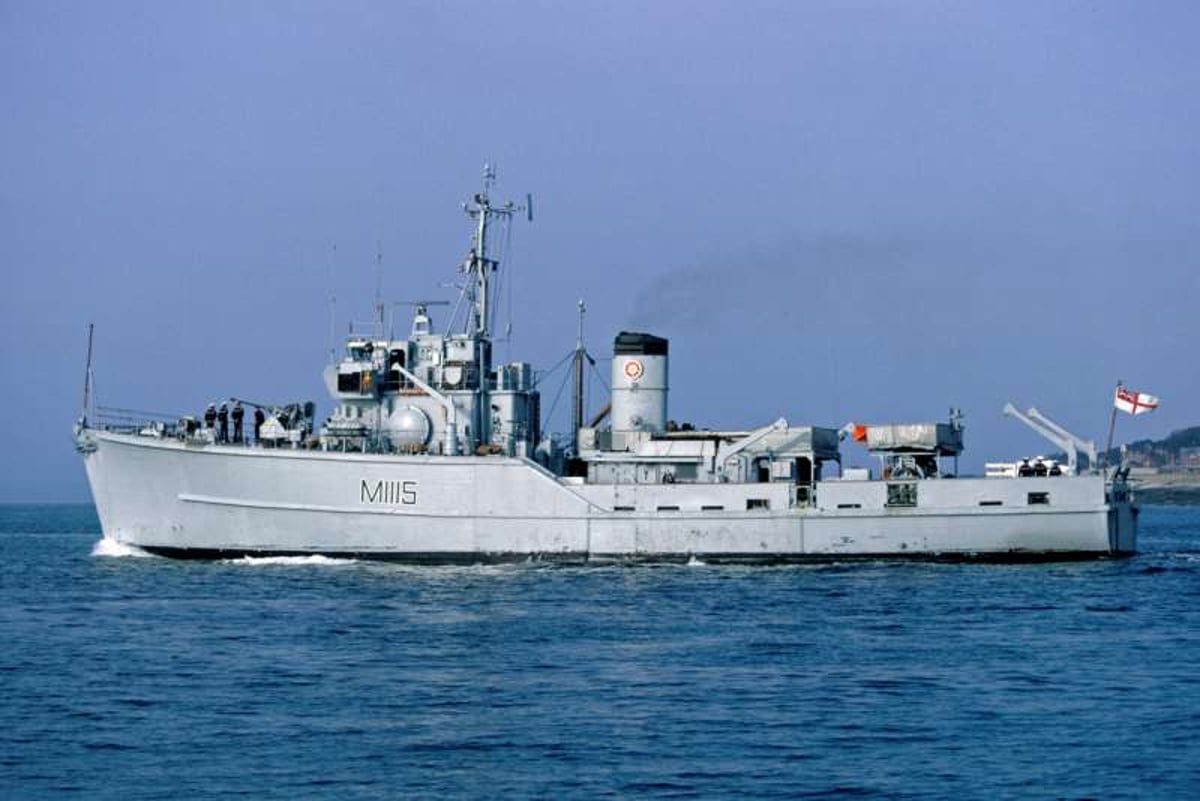
HMS Bronington was part of the Ton-class minesweepers, a class of ships developed by the Royal Navy in the 1950s. These vessels were specifically designed to counter the increasing complexity of naval mines after World War II. The Ton-class ships represented a new generation of minesweepers that combined durability, advanced technology, and specialized operational capabilities.
One of the most distinctive aspects of the ship’s design was its hull construction. Instead of traditional steel, the hull was made primarily from wood and non-magnetic materials. This design choice significantly reduced the vessel’s magnetic signature, which was essential when dealing with magnetic mines that could detonate when detecting metal.
The ship was relatively compact compared to larger warships, but it was highly specialized. Its equipment included minesweeping gear capable of dealing with various types of mines, including acoustic and magnetic mines. This versatility made it a valuable asset in maintaining safe navigation routes for both military and civilian vessels.
Role of HMS Bronington in Naval Operations
During its time in service, HMS Bronington carried out numerous missions related to mine countermeasures. Minesweeping operations were essential for keeping sea lanes open, especially in regions where naval activity was intense. The ship and its crew were responsible for ensuring that naval fleets and commercial shipping could operate safely without the risk of hidden underwater explosives.
The work performed by minesweepers often went unnoticed compared to large combat vessels, but their role was crucial. Without effective minesweeping operations, naval fleets would face significant risks when entering or leaving ports. Ships like HMS Bronington helped maintain maritime security and ensured the safe movement of goods and military resources.
The ship’s missions required not only advanced equipment but also a highly trained crew. Minesweeping demanded careful coordination, technical knowledge, and patience. The crew had to detect potential mines, deploy the appropriate equipment, and ensure that the area was completely cleared before declaring it safe for navigation.
The Ton-Class Minesweepers and Their Importance
HMS Bronington belonged to a class of vessels that played an important role in post-war naval strategy. The Ton-class minesweepers were widely used by the Royal Navy and also exported to several allied navies around the world. These ships became known for their reliability and adaptability in a variety of operational environments.
One of the main reasons for the success of the Ton-class minesweepers was their innovative design. The use of non-magnetic materials, combined with advanced minesweeping equipment, made them highly effective in dealing with modern naval mines. This design also influenced the development of later generations of mine countermeasure vessels.
Over time, the Ton-class ships served in numerous operations and exercises, demonstrating their value in maintaining maritime security. Their presence ensured that naval forces could operate in contested waters without facing the constant threat of mines.
HMS Bronington and Its Connection to Historical Figures
One of the interesting aspects of HMS Bronington’s history is its connection to notable individuals. Among those who served on the ship was a young naval officer who would later become an important figure in British public life. This connection has often been mentioned in discussions about the ship’s historical significance.
Such associations add an additional layer of interest to the vessel’s story. While the ship itself was primarily designed for military purposes, the people who served aboard it contributed to its legacy. Their experiences reflect the daily realities of naval service during a time when minesweeping was a critical component of maritime defense.
The presence of notable figures on board has also helped keep the ship’s story alive in public memory. For historians and enthusiasts, these connections provide a fascinating glimpse into the personal histories tied to naval vessels.
Life Aboard HMS Bronington
Life aboard a minesweeper like HMS Bronington was quite different from that on larger warships. The ship’s relatively small size meant that the crew lived and worked in close quarters. Despite these limitations, the crew developed a strong sense of camaraderie and teamwork, which was essential for the success of their missions.
Daily routines on the ship involved maintaining equipment, performing training exercises, and preparing for minesweeping operations. Crew members had specific roles, ranging from navigation and engineering to handling the minesweeping gear. Each role was vital to ensuring the ship’s operational effectiveness.
Living conditions were modest, but the crew adapted to the challenges of life at sea. Long deployments and demanding missions required resilience and discipline. These experiences helped shape the identity of the crew and contributed to the overall legacy of the ship.
Operational Service History of HMS Bronington
HMS Bronington entered service during a period when naval strategy was evolving rapidly. After the Second World War, many countries recognized that underwater mines would remain a significant threat to naval operations and commercial shipping. Because of this, specialized minesweeping vessels like Bronington became an essential part of naval fleets. Once commissioned into the Royal Navy, the ship quickly became involved in training exercises, operational patrols, and mine countermeasure missions.
During its years of service, HMS Bronington operated primarily in waters where the risk of naval mines was considered high or where training activities were required to prepare naval crews for real-world missions. The ship participated in various exercises designed to simulate mine-clearing operations. These exercises allowed crews to practice detecting mines, deploying minesweeping equipment, and coordinating with other naval vessels.
The ship’s operational role also included supporting broader naval operations. Minesweepers often worked ahead of larger fleets, ensuring that sea routes were safe for passage. This required precision and patience, as minesweeping could take hours or even days depending on the size of the area being cleared. HMS Bronington proved to be reliable and effective in performing these tasks, contributing to the Royal Navy’s ability to maintain safe navigation routes.
Minesweeping Technology Used on HMS Bronington
One of the most fascinating aspects of HMS Bronington was the technology it used to detect and remove mines. Minesweeping technology had evolved considerably by the time the ship was built, and vessels in the Ton-class were equipped with specialized gear designed to handle different types of mines. These included contact mines, magnetic mines, and acoustic mines.
Contact mines were the simplest type. They exploded when a ship physically touched them. Minesweepers could remove these by dragging cables or cutting devices through the water to sever the mine’s mooring line. Once the line was cut, the mine would float to the surface, where it could be safely destroyed.
Magnetic mines were more sophisticated and responded to the magnetic field generated by a ship’s hull. To deal with these mines, HMS Bronington used equipment that created magnetic signatures designed to trigger the mines at a safe distance. The ship’s wooden hull helped reduce its own magnetic field, making it safer when operating in areas with magnetic mines.
Acoustic mines responded to sound produced by ship engines. Minesweepers used devices that produced controlled noise to trigger these mines before other ships passed through the area. The combination of these technologies allowed HMS Bronington to perform complex mine countermeasure operations effectively.
Crew Training and Operational Discipline
Operating a minesweeper required a highly trained crew. The work was both technical and dangerous, meaning every crew member had to understand their responsibilities thoroughly. Training was an ongoing process aboard HMS Bronington, with crew members regularly participating in drills and exercises to maintain readiness.
One of the key aspects of training involved learning how to operate minesweeping equipment. This equipment required careful handling and precise deployment. Crew members had to understand the behavior of different types of mines and how best to neutralize them. Mistakes could have serious consequences, so training emphasized attention to detail and teamwork.
In addition to technical skills, the crew also needed strong navigation and communication abilities. Minesweeping operations often required coordination with other ships and naval command centers. Clear communication ensured that operations proceeded safely and efficiently. The crew of HMS Bronington developed a reputation for professionalism and reliability during these missions.
The Role of HMS Bronington in Naval Training
Besides operational missions, HMS Bronington also played an important role in naval training programs. Minesweeping was a specialized skill, and new naval recruits needed practical experience to master it. Ships like Bronington provided an ideal platform for training future naval personnel.
Training exercises typically involved simulated minefields where crews practiced locating and removing mines. These exercises allowed trainees to experience the challenges of real minesweeping operations without facing actual danger. Experienced officers supervised the training, ensuring that recruits learned the correct procedures.
Through these training missions, HMS Bronington helped prepare a new generation of naval sailors. The experience gained on board was invaluable, as it taught sailors how to operate under pressure and handle complex equipment. This training role added another important dimension to the ship’s service history.
HMS Bronington’s Connection to Prince Charles
One of the most widely discussed aspects of HMS Bronington’s history is its connection to Prince Charles. Before becoming King Charles III, he served in the Royal Navy as part of his military training. During his naval career, he served as the commanding officer of HMS Bronington.
Prince Charles took command of the ship in 1976. His service aboard the vessel attracted public attention and highlighted the importance of minesweepers within the Royal Navy. During his time as commander, he participated in various training exercises and naval activities.
His association with the ship remains an interesting historical detail. It not only reflects his commitment to military service but also adds a unique element to the ship’s story. Because of this connection, HMS Bronington gained additional recognition beyond its operational achievements.
Decommissioning of HMS Bronington
After many years of service, HMS Bronington was eventually retired from active duty. Like many naval vessels, its operational lifespan came to an end as newer technologies and more advanced ships were introduced into naval fleets. The process of decommissioning marked the conclusion of its active role in the Royal Navy.
Decommissioning involved removing the ship from official service and preparing it for its next phase. In some cases, ships are scrapped or sold, but HMS Bronington was preserved due to its historical significance. Its connection to Prince Charles and its role in the Ton-class fleet made it an important part of British naval heritage.
Preservation efforts were initiated to ensure that the ship would not simply disappear from history. Instead, it was maintained as a historical vessel that could educate the public about naval operations and maritime history.
HMS Bronington as a Museum Ship
After leaving active service, HMS Bronington was preserved as a museum ship. Museum ships serve as floating historical exhibits, allowing visitors to explore the vessel and learn about its history. For many people, visiting a preserved naval ship provides a unique opportunity to understand what life at sea was like for sailors.
The ship was eventually located at Birkenhead, where it became part of a maritime heritage collection. Visitors could walk through the ship, observe the equipment used in minesweeping operations, and gain insight into the daily routines of the crew.
Museum ships play an important role in preserving maritime history. They help ensure that future generations understand the sacrifices and contributions of naval personnel. HMS Bronington served this purpose for many years, attracting visitors interested in naval history.
Damage and Challenges in Preservation
Unfortunately, preserving historic ships can be extremely challenging. Over time, ships require extensive maintenance to prevent deterioration caused by weather, water exposure, and structural aging. HMS Bronington faced similar challenges during its years as a preserved vessel.
At one point, the ship suffered significant damage due to flooding. This incident highlighted the difficulties involved in maintaining aging vessels. Restoration efforts can be costly and require specialized expertise to ensure that the ship remains structurally sound.
Despite these challenges, many maritime heritage organizations and volunteers have expressed interest in preserving HMS Bronington. Their efforts reflect the broader commitment to protecting historical naval vessels and maintaining them as educational resources.
The Legacy of HMS Bronington
The legacy of HMS Bronington extends far beyond its years of active service. As a Ton-class minesweeper, the ship represents an important era in naval history when minesweeping technology played a crucial role in maritime security. The vessel also symbolizes the dedication and bravery of the sailors who served aboard it.
For historians, the ship provides valuable insight into post-war naval strategies and technological developments. Minesweeping operations often occurred behind the scenes, but they were essential for maintaining safe sea routes and supporting naval fleets.
The connection to Prince Charles further enhances the ship’s historical significance. This association has helped keep the story of HMS Bronington alive in public memory and continues to attract interest from both historians and the general public.
Importance of Preserving Naval Heritage
Ships like HMS Bronington remind us of the importance of preserving naval heritage. Naval vessels are not just machines; they are symbols of national history, technological innovation, and human dedication. Preserving them allows future generations to learn about the past and appreciate the challenges faced by those who served at sea.
Maritime museums and heritage organizations play a vital role in this effort. Through restoration projects, educational programs, and public exhibitions, they ensure that historical ships remain accessible to the public.
HMS Bronington’s story demonstrates how even relatively small naval vessels can have a lasting impact on history. Its service, its connection to notable figures, and its preservation efforts all contribute to its enduring legacy.
Conclusion
HMS Bronington stands as an important example of mid-20th-century naval engineering and maritime strategy. Built as part of the Ton-class minesweepers, the ship was designed to protect naval fleets and commercial shipping routes from the dangerous threat of underwater mines. Its specialized equipment, wooden hull, and dedicated crew made it an effective and reliable vessel during its years of service.
Throughout its operational life, the ship carried out essential missions that often went unnoticed by the public but were vital for maritime safety. Minesweeping operations required precision, discipline, and courage, and the crew of HMS Bronington consistently demonstrated these qualities.
The vessel’s connection to Prince Charles added another layer of historical interest, helping to bring attention to the important role played by minesweepers in naval operations. After its decommissioning, efforts to preserve the ship ensured that its story would continue to be told.
Although the ship has faced challenges in preservation, its historical significance remains clear. HMS Bronington represents not only a specific period in naval history but also the broader tradition of maritime service and innovation. For historians, naval enthusiasts, and the general public, the story of this ship continues to serve as a reminder of the importance of protecting maritime heritage.
FAQs
What was HMS Bronington used for?
HMS Bronington was a Royal Navy minesweeper designed to detect and remove underwater naval mines.
When was HMS Bronington built?
HMS Bronington was built in the 1950s as part of the Ton-class minesweepers.
Did Prince Charles serve on HMS Bronington?
Yes, Prince Charles served as the commanding officer of HMS Bronington in 1976.
What type of ship was HMS Bronington?
It was a Ton-class minesweeper designed for mine countermeasure operations.
Why was HMS Bronington made with a wooden hull?
The wooden hull reduced the ship’s magnetic signature to prevent triggering magnetic mines.
Where was HMS Bronington preserved after retirement?
The ship was preserved as a museum vessel in Birkenhead.
What happened to HMS Bronington after it became a museum ship?
The ship suffered damage from flooding and has faced ongoing preservation challenges.
Why are minesweepers like HMS Bronington important?
They ensure safe sea routes by detecting and removing dangerous naval mines.
What class of ship did HMS Bronington belong to?
It belonged to the Ton-class minesweepers used by the Royal Navy.
Why is HMS Bronington historically significant?
The ship is significant for its minesweeping service, naval heritage value, and connection to Prince Charles.
Also read:Whitley Berkshire: A Complete Guide to History, Lifestyle, and Local Charm