
Introduction to the Harrier Attack Game on Amstrad
Harrier Attack on the Amstrad CPC is widely remembered as one of the most exciting and recognizable flight-action games from the early days of home computing. During the 1980s, the gaming industry was still developing its identity, and many classic titles were built with limited hardware yet extraordinary creativity. Harrier Attack became one of those memorable experiences that perfectly captured the thrill of piloting a military jet while navigating enemy territory.
The Amstrad CPC computers were popular home systems in Europe, especially in the United Kingdom. These machines allowed users to play games, write programs, and explore computing in ways that were revolutionary for that time. Developers quickly realized the potential of the platform and began producing games that combined arcade-style action with home computer accessibility. Harrier Attack emerged as one of the standout titles that showcased what these systems could do.
At its core, the game places the player in control of a Harrier jump jet, flying across a scrolling battlefield filled with enemy defenses. The objective is straightforward: destroy enemy installations while surviving waves of attacks. Despite its simple concept, the gameplay becomes increasingly challenging and rewarding as the player progresses.
What makes Harrier Attack particularly fascinating is how it balances simplicity with excitement. Even players who had never experienced a flight game before could quickly learn the controls. However, mastering the game required skill, timing, and strategic thinking. This combination made it extremely addictive for players and contributed to its long-lasting popularity.
Even decades after its release, Harrier Attack remains a beloved title in retro gaming communities. Emulators and online archives allow new generations of gamers to discover this classic Amstrad game and appreciate the ingenuity of early game development.
The Amstrad CPC and the Rise of Home Computer Gaming
To fully appreciate Harrier Attack, it is important to understand the environment in which it was created. The Amstrad CPC series was introduced in the mid-1980s as an affordable and user-friendly home computer. It quickly became a competitor to other popular machines such as the ZX Spectrum and the Commodore 64.
One of the key advantages of the Amstrad CPC was its all-in-one design. Unlike many computers of the time that required separate components, the CPC often came bundled with a monitor and built-in storage system. This made it easier for families and new users to begin exploring computing and gaming without complicated setup procedures.
The system also offered respectable graphical capabilities for its era. While it was still an 8-bit machine with limited memory, developers could display colorful graphics and smooth movement when using clever programming techniques. This gave game creators the opportunity to produce visually appealing experiences that rivaled other platforms.
Gaming on the Amstrad CPC quickly became a major part of its appeal. Developers released a wide variety of titles including puzzle games, adventure games, racing games, and action shooters. Players could load games from cassette tapes or floppy disks, often waiting several minutes before the game started. Despite these delays, the excitement of playing new titles made the experience worthwhile.
Within this growing library of games, Harrier Attack stood out as an exciting military-themed action game that captured the imagination of players who loved aviation and combat scenarios.
Development and Origins of Harrier Attack
Harrier Attack was developed by Durell Software, a British game development company known for producing innovative titles during the 1980s. The company specialized in creating games for popular 8-bit systems and often experimented with new gameplay mechanics.
The inspiration behind Harrier Attack came from the real Harrier jump jet aircraft. This military jet was famous for its ability to perform vertical takeoff and landing, a capability that made it extremely versatile in real-world military operations. By designing a game around this aircraft, the developers were able to create a unique flying experience that stood apart from other games.
When the game was released, it immediately gained attention from players and gaming magazines. Critics praised its smooth scrolling environments and challenging gameplay. Considering the limited technology available at the time, these features were impressive achievements.
The game was eventually released on multiple platforms including the ZX Spectrum and Commodore 64. However, the Amstrad CPC version became particularly popular because of its colorful graphics and responsive controls. Many players remember this version as the definitive experience of the game.
The success of Harrier Attack demonstrated how creative developers could transform simple ideas into memorable gaming experiences. Even with minimal hardware resources, they managed to produce a game that remained fun and engaging for countless players.
Gameplay Overview and Objectives
The gameplay of Harrier Attack revolves around piloting a Harrier jet across a continuously scrolling landscape filled with enemy defenses. Players must navigate carefully while destroying targets such as radar stations, missile launchers, and other military installations.
The controls are relatively simple, allowing players to move the jet up or down while firing weapons at enemy targets. The simplicity of the controls makes the game accessible, but surviving longer missions requires quick reactions and strategic thinking.
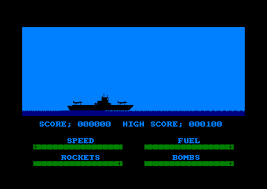
A key aspect of the game is resource management. The player’s jet has limited fuel, meaning it cannot remain in the air indefinitely. To continue flying, players must land on aircraft carriers positioned throughout the level. Landing successfully requires precise timing and careful control of the aircraft.
Another challenge comes from the various enemy threats that appear during gameplay. These include anti-aircraft guns, missiles, and ground vehicles that attempt to destroy the player’s jet. As the game progresses, these enemies become more aggressive and difficult to avoid.
The combination of combat, navigation, and fuel management creates a gameplay loop that is both challenging and satisfying. Players constantly balance risk and caution as they attempt to survive longer and achieve higher scores.
Graphics and Visual Design
The graphics in Harrier Attack reflect the technical limitations of 8-bit computers while still delivering a visually engaging experience. The Amstrad CPC version particularly benefited from the system’s ability to display multiple colors on screen.
The scrolling terrain beneath the aircraft creates the illusion of continuous flight. Players see landscapes moving beneath their jet, including buildings, hills, and enemy structures. This scrolling effect was a technical achievement at the time and contributed greatly to the sense of motion.
The Harrier jet itself is represented by a detailed sprite that clearly resembles the real aircraft. Despite the limited resolution, the developers managed to capture the distinctive shape of the jet, including its wings and nose design.
Enemy installations are also carefully designed so that players can quickly recognize them. Radar stations, missile launchers, and other targets have unique appearances that make them easy to identify during fast-paced gameplay.
Although modern players may find the graphics simple, they were impressive for the era and played a crucial role in making the game visually appealing.
Sound Effects and Audio Experience
Audio design in early computer games was often limited by hardware restrictions, and Harrier Attack was no exception. The Amstrad CPC’s sound capabilities allowed for basic tones and simple effects rather than complex music tracks.
Despite these limitations, the game effectively used sound to enhance the experience. The engine noise of the jet, explosions from destroyed targets, and warning sounds from enemy attacks created an atmosphere of tension and excitement.
Sound effects were especially important in a game like Harrier Attack because they provided feedback to the player. Hearing an explosion after destroying an enemy installation or detecting the sound of incoming missiles helped players stay aware of the action.
The absence of continuous background music was common in games from this era. Instead, developers focused on gameplay performance and responsiveness. This ensured that the game ran smoothly even during intense combat sequences.
For many retro gamers, the simple sounds of Harrier Attack are nostalgic reminders of the early days of computer gaming.
The Real Harrier Jump Jet and Its Influence
The Harrier jump jet is one of the most famous aircraft in military aviation history. Developed in the United Kingdom, it introduced the revolutionary ability to take off and land vertically or on extremely short runways.
This unique capability made the aircraft ideal for operations from aircraft carriers and temporary airfields. It could operate in locations where traditional jets could not, making it a valuable asset for military forces.
The developers of Harrier Attack used this aircraft as the central theme of the game. While the gameplay mechanics are simplified compared to real flight simulation, they capture the essence of flying a powerful combat jet.
For many players in the 1980s, the game served as their first introduction to the Harrier aircraft. It sparked curiosity about aviation and military technology, demonstrating how video games can inspire interest in real-world topics.
The connection between the real aircraft and the game helped give Harrier Attack a sense of authenticity that many players appreciated.
Differences Between Platform Versions
Although Harrier Attack was released on multiple computer systems, each version had slight differences due to hardware limitations. The ZX Spectrum version, for example, featured more limited color capabilities compared to the Amstrad CPC.
The Commodore 64 version benefited from stronger sound capabilities, allowing for slightly more advanced audio effects. However, the Amstrad version maintained an advantage in terms of colorful graphics and visual clarity.
Gameplay mechanics remained mostly consistent across platforms. Players controlled the same Harrier jet and faced similar enemy defenses regardless of the system they used.
These variations demonstrate how developers had to adapt their games to the strengths and weaknesses of each platform. This adaptability was a common challenge for game creators during the 8-bit era.
Many players who owned an Amstrad CPC considered their version to be one of the best representations of the game.
Strategy Tips for Playing Harrier Attack
Success in Harrier Attack requires more than simply shooting at enemy targets. Players must develop strategies that help them survive longer missions.
One important strategy is learning when to attack and when to avoid danger. Charging directly into enemy defenses often leads to quick destruction. Skilled players learn to approach targets carefully while maintaining enough distance to evade missiles.
Fuel management is another critical element. Players should always monitor their fuel levels and plan ahead for landing opportunities. Missing an aircraft carrier landing can end a mission prematurely.
Positioning also plays a major role in survival. Keeping the jet at the right altitude allows players to avoid certain attacks while maintaining a clear view of incoming threats.
Practice is ultimately the key to mastering the game. Over time, players develop better reflexes and learn how to anticipate enemy patterns.
Legacy in Retro Gaming
Harrier Attack holds an important place in retro gaming history. It represents a time when creativity and clever programming were more important than massive development budgets.
Many retro gaming enthusiasts continue to celebrate the game through online communities, forums, and video content. Players share memories, gameplay tips, and stories about their experiences with the game.
Emulators now allow modern players to experience Harrier Attack on contemporary computers. These tools preserve the game for future generations and ensure that it remains accessible.
Retro gaming events and conventions often highlight classic titles like Harrier Attack as examples of early video game innovation.
The continued interest in the game demonstrates how powerful nostalgia and classic gameplay can be.
Conclusion
Harrier Attack on the Amstrad CPC remains one of the most memorable games from the early era of home computing. Its combination of simple controls, challenging gameplay, and aviation-inspired action created an experience that captured the imagination of players.
Despite the technological limitations of the 1980s, the developers succeeded in creating a game that was both entertaining and innovative. The scrolling landscapes, strategic fuel management, and intense combat sequences made it stand out among many other titles of its time.
Today, the game is remembered as a classic example of 8-bit game design. It demonstrates how creativity and clever programming can produce timeless entertainment even with limited hardware.
For retro gaming enthusiasts, Harrier Attack represents more than just a game. It is a piece of gaming history that reflects the passion and ingenuity of early developers who helped shape the industry.
FAQs
What is Harrier Attack on Amstrad?
Harrier Attack is a classic 1980s flight-action video game where players control a Harrier jet and destroy enemy targets while avoiding defenses.
Who developed the Harrier Attack game?
The game was developed by the British company Durell Software during the 1980s.
What platform is Harrier Attack most famous on?
Although released on several systems, the Amstrad CPC version is especially popular among retro gamers.
What makes the game challenging?
Limited fuel, increasing enemy defenses, and precise aircraft control create a challenging gameplay experience.
Can Harrier Attack still be played today?
Yes, the game can be played using retro computer emulators or through preserved versions available online.
Is Harrier Attack a flight simulator?
No, it is primarily an arcade-style action game rather than a realistic flight simulator.
Why is the game considered a classic?
Its addictive gameplay, clever design, and nostalgic value have helped it remain popular in retro gaming communities.
Also read:Blantyre Prison: History, Purpose, and Its Role in the Justice System