
Introduction to British Military Beret Colours
The British military has a long-standing tradition of using berets as part of their uniform, not just for practicality but also as a symbol of identity, prestige, and unit pride. The colour of a beret is more than just an aesthetic choice; it is a visual representation of a soldier’s role, regiment, or branch of service. Understanding these colours is essential for anyone with an interest in military history, uniforms, or the British armed forces. From the scarlet red of elite regiments to the more understated shades of logistical units, each colour tells a story, reflecting both historical evolution and functional necessity. Berets first became a standard part of the British military uniform during the mid-20th century, influenced heavily by European military traditions. Initially adopted for their practicality and ease of wear, berets quickly evolved into an essential element of military identity. Unlike traditional hats or helmets, the beret offered soldiers comfort in all climates and was versatile enough to be worn under helmets if needed. Over time, the British Army, Royal Air Force, and Royal Navy each developed their own colour-coded systems to indicate unit, function, or specialization. Today, British military berets are not just ceremonial; they signify pride, expertise, and belonging. They are worn during parades, formal inspections, and even in combat situations. Collectors and enthusiasts often pay close attention to these beret colours, as they provide insight into a soldier’s background and the history of their regiment. Understanding these colours requires not only knowledge of the shades themselves but also an appreciation of the traditions and regulations that govern their use.
Historical Origins of the British Military Beret
The story of the British military beret begins in the early 20th century, though headgear similar to the beret had been worn in Europe for centuries. The practical advantages of the beret – lightweight, flexible, and easy to store – appealed to military planners looking for functional alternatives to cumbersome hats. During World War I, soldiers in various armies started adopting soft caps that could be easily worn under helmets, and the British Army observed and eventually embraced these trends. By World War II, the beret had become a formal part of several elite British regiments, most notably the paratroopers and the armored corps. Its adoption was not uniform across all units initially; different regiments experimented with variations in shape, fit, and colour. The Royal Tank Regiment, for instance, favored a black beret to mask oil stains and grime, while airborne units adopted maroon to distinguish themselves. These early choices reflected both practical concerns and a desire for distinct identity within the army. The influence of colonial conflicts also shaped beret adoption. British units stationed overseas often interacted with local forces, some of which had adopted berets as part of their dress. Observing their effectiveness in terms of comfort and morale, British commanders increasingly standardized beret use across different corps and regiments. By the 1950s, the beret had cemented itself as a symbol of professionalism and military tradition, and its colours became codified to reflect specific roles within the armed forces.
Significance of Beret Colours in the British Army
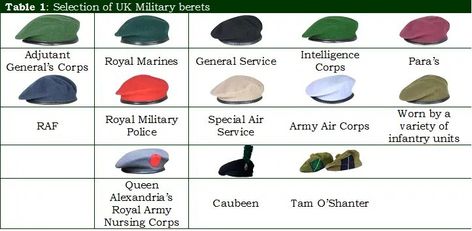
Beret colours in the British Army carry a depth of meaning that goes beyond mere aesthetics. Each colour is carefully chosen to represent the heritage, function, or operational role of a unit. For example, green berets are synonymous with elite forces, signalling rigorous training and special operations capabilities, while darker shades often indicate more traditional infantry or logistical units. The colour system ensures that soldiers, officers, and even civilians can quickly identify the type of unit a soldier belongs to, which has practical implications both on and off the battlefield. Beyond identification, beret colours serve a symbolic purpose. Units with long and distinguished histories often maintain specific beret colours as part of their identity, linking modern soldiers with their regiment’s storied past. This sense of continuity reinforces morale and pride. Moreover, the ceremonial use of berets in parades or public events showcases the army’s organization and professionalism, with colour distinctions allowing spectators to appreciate the diversity and structure of the forces. Beret colours are also tied to operational functionality. Darker shades, such as black or navy, are used by units engaged in mechanized or armored roles to reduce the appearance of dirt and oil, while brighter or more distinctive colours are often reserved for airborne or ceremonial units. These choices reflect both historical precedent and modern practicality, ensuring that beret colours remain relevant in contemporary military contexts.
The Iconic Green Beret
The green beret is perhaps the most recognized of all British military beret colours, associated almost universally with elite forces. It gained prominence through the British Army’s Special Air Service (SAS), who adopted it to signify their specialized training and unconventional warfare capabilities. The shade of green used is known as “sage green,” a subtle, muted tone that balances ceremonial appeal with operational practicality. Historically, the green beret distinguished commandos and other special units during World War II. Soldiers trained in reconnaissance, sabotage, and behind-the-lines operations needed a symbol of unity that also reflected their elite status. The adoption of the green beret served both purposes: it fostered esprit de corps and created an instantly recognizable identifier for special operations personnel. Over time, other units involved in similar functions adopted green berets, further solidifying its association with skill, courage, and tactical expertise. In modern contexts, the green beret continues to command respect and admiration. It is not merely worn; it is earned through intensive training, operational experience, and strict selection processes. For civilians and military historians alike, seeing a green beret immediately signals a soldier’s elite training, commitment, and operational readiness. Its enduring popularity reflects both historical significance and contemporary recognition of excellence in the British armed forces.
Maroon Beret – Symbol of Airborne Excellence

The maroon beret is instantly linked to airborne forces and paratroopers, symbolizing bravery, agility, and elite training. Its adoption by British forces dates back to World War II, when airborne units sought a distinctive headgear to set themselves apart from standard infantry. The shade, a deep and slightly reddish-purple tone, was chosen for visibility during ceremonial occasions and as a mark of pride for troops who underwent rigorous parachute training. Maroon berets quickly became synonymous with airborne operations, and soldiers wearing them were instantly recognized for their specialist skills and courage under fire.
Paratroopers take immense pride in their maroon beret, which represents not only their operational role but also the successful completion of grueling parachute training courses. Unlike other berets, the maroon beret carries with it a sense of elite identity, reinforced by the high-risk nature of airborne missions. Over the decades, it has become more than just uniform headgear; it is a badge of honor. The British Army maintains strict regulations for wearing the maroon beret, ensuring that only those who meet the qualification standards are entitled to wear it. This tradition reinforces unit cohesion and creates a clear visual distinction from regular infantry.
In addition to the British Army, the maroon beret is also recognized internationally as a symbol of airborne forces, with many allied nations adopting the same colour for their paratroopers. This shared symbolism helps foster a sense of camaraderie during multinational exercises and joint operations, highlighting the maroon beret as a globally respected emblem of elite military capability.
Black Beret – The Royal Tank Regiment and Mechanized Units
The black beret is most closely associated with the Royal Tank Regiment (RTR) and mechanized units, reflecting both practicality and tradition. The origin of the black colour lies in its functionality: it conceals oil stains, grease, and dirt commonly encountered in armored vehicle operations. Adopted during the early years of armored warfare, the black beret quickly became an integral part of the tank regiment identity, signifying both technical expertise and operational readiness.
Over time, the black beret has expanded beyond the RTR to other mechanized and armored units. Its dark tone carries connotations of discipline, resilience, and technical skill. In contrast to brighter or more ceremonial beret colours, black signifies the soldier’s connection to machinery, engineering, and the complexities of armored warfare. It also allows soldiers to maintain a neat and professional appearance even in the harshest operational conditions, balancing practicality with tradition. The black beret’s iconic status in British military history makes it instantly recognizable and commands respect among both civilians and fellow soldiers.
The design and fit of the black beret have also evolved to suit the operational needs of armored units. Unlike other berets, which may be worn loosely or angled for style, the black beret is often molded to conform closely to the head, minimizing interference when wearing helmets or communications equipment inside tanks. This functional aspect further reinforces the practicality and symbolic value of the black beret as a hallmark of mechanized warfare.
Navy Blue Beret – Royal Navy and Commando Units
The navy blue beret is primarily associated with the Royal Navy and certain commando units, representing maritime tradition, operational versatility, and elite amphibious capabilities. Its deep blue shade symbolizes the connection to the sea, naval heritage, and the complex logistics involved in maritime operations. For Royal Navy personnel involved in specialized operations, the navy blue beret is both a practical piece of headgear and a ceremonial symbol of prestige.
Historically, the navy blue beret emerged as a formal headgear in the mid-20th century, aligning with the Navy’s broader uniform reforms. It was designed to be versatile, suitable for both shipboard duties and shore-based ceremonial events. Over time, certain naval commando and amphibious units adopted the navy blue beret to reflect their unique operational roles, including reconnaissance, boarding actions, and amphibious assault. Wearing this beret indicates both specialized training and a deep connection to maritime operations.
Beyond ceremonial use, the navy blue beret also serves a practical purpose in naval operations. Its colour does not easily show dirt or water stains, making it suitable for shipboard life where exposure to elements is constant. Additionally, it complements other elements of naval uniforms, ensuring a cohesive and professional appearance during formal inspections, parades, and public duties.
Additional Beret Colours and Their Roles
While green, maroon, black, and navy blue are the most iconic, the British military also uses other beret colours for specific corps and regiments. Khaki or sand-coloured berets, for example, are often used by units deployed in desert or arid environments, providing camouflage while maintaining uniform standards. Grey berets are occasionally used by engineering or support units, reflecting technical expertise and non-combat roles. Light blue berets are traditionally worn by United Nations peacekeeping forces, symbolizing international cooperation and neutrality.
Each colour reflects careful consideration of both operational needs and symbolic meaning. Engineers, medics, logisticians, and ceremonial units each have distinct berets, allowing for instant identification and a sense of pride within each group. The diversity of beret colours underscores the British military’s commitment to both tradition and modern operational requirements. Collectors and historians often study these variations to trace unit histories, deployments, and organizational changes over time.
The continued use and evolution of beret colours demonstrate the British armed forces’ ability to balance tradition, functionality, and symbolism. Each colour carries a story, a legacy of training, courage, and operational excellence that connects modern soldiers with generations of service members who came before them. Berets remain one of the most visible and enduring symbols of the British military, representing both identity and professionalism.
Beret Insignia and Wearing Regulations
Berets are rarely plain; they almost always feature regimental insignia, badges, or emblems, which further distinguish units and denote rank or specialization. The placement of these insignia follows strict regulations, with badges typically worn on the left side of the beret above the eye line. The combination of colour and insignia provides a complete visual representation of a soldier’s identity within the military structure.
Wearing regulations also dictate how the beret is styled. For example, certain units require the beret to be worn pulled to the right, while others prefer a centered fit. These rules, combined with the colour and insignia, reinforce discipline, uniformity, and pride within the unit. Any deviation from these regulations is generally considered a breach of military protocol, highlighting the symbolic and practical importance of beret standards.
Training on beret wear is part of standard military induction and ceremonial preparation. New recruits learn not only how to fit, shape, and maintain their beret but also the historical significance behind the colours and badges. This education instills a sense of respect for tradition and ensures that the beret continues to serve as a meaningful and recognizable symbol of the British armed forces.
Conclusion
British military beret colours are much more than a fashion choice; they are a language of identity, heritage, and operational distinction. From the green berets of the SAS to the maroon worn by airborne forces, each colour carries deep historical roots and contemporary significance. Black and navy berets reflect the specialized skills of armored and naval personnel, while additional shades highlight technical, logistical, and ceremonial roles. The combination of colour, insignia, and wearing regulations creates a visual system that communicates a soldier’s role, achievements, and unit pride. Understanding these colours provides insight into the structure, tradition, and professionalism of the British armed forces, revealing a complex and fascinating world behind what might seem like simple headgear. British military berets remain a timeless symbol, connecting modern service members with the proud legacy of those who wore them before.
FAQs
What does the green beret represent in the British military? It signifies elite forces, primarily the SAS, and is earned through rigorous training.
Why do the Royal Tank Regiment wear black berets? Black berets conceal oil and grease, suitable for armored operations.
What is the significance of the maroon beret? It is worn by airborne forces and paratroopers, indicating specialized parachute training.
Which units wear navy blue berets? Royal Navy personnel and certain commando or amphibious units wear navy blue.
Are beret colours linked to historical traditions? Yes, each colour reflects unit heritage, operational role, and longstanding military traditions.
Can all soldiers choose their beret colour? No, colours are assigned based on unit, role, and qualification standards.
Do beret colours differ internationally? Yes, while some colours like green and maroon are recognized globally, many nations have unique colour systems.