
Introduction to Maclean of Duart
The name Maclean of Duart carries a resonance that echoes through the rugged landscapes of Scotland’s western isles. For centuries, the Macleans stood as one of the most respected and formidable Highland clans, shaping regional politics, culture, and warfare. Their story is not simply one of battles and chiefs; it is a narrative woven with loyalty, resilience, ambition, and a deep connection to the land.
At the heart of this legacy lies Duart Castle, perched dramatically on the Isle of Mull. From its stone walls, clan leaders watched over sea routes, defended their territory, and projected authority across the Hebrides. The Macleans were never merely local rulers—they were strategic players in the broader conflicts that defined medieval and early modern Scotland.
Understanding Maclean of Duart means stepping into a world where kinship dictated alliances, honor guided decisions, and survival often depended on strength. Yet beyond the romantic imagery of tartans and claymores lies a complex history filled with triumphs and setbacks. This article explores that history in depth, revealing how the Macleans built their power, endured devastating losses, and ultimately preserved a legacy that continues to inspire pride among descendants worldwide.
The Origins of Clan Maclean
The roots of Clan Maclean stretch back to the early medieval period, a time when Scotland was a mosaic of tribal territories and emerging lordships. Like many Highland clans, the Macleans trace their ancestry to a mix of Norse and Gaelic heritage. This blend reflects the cultural crossroads of the Hebrides, where Viking settlers and Celtic inhabitants interacted for generations.
The clan’s name is believed to derive from “Mac Gille Eoin,” meaning “son of the servant of St. John.” Over time, this evolved into Maclean, signaling both religious devotion and familial identity. Early clan leaders were not monarchs but respected warriors and landholders who earned influence through bravery and strategic marriages.
What makes the Maclean origin story particularly compelling is the way it mirrors Scotland’s transformation. As centralized authority grew under the Scottish crown, clans had to navigate shifting loyalties. The Macleans proved adept at this balancing act, supporting powerful figures when necessary while maintaining strong autonomy. Their rise was gradual but deliberate, setting the stage for their later dominance in the western seaboard.
The Rise of the Macleans in the Hebrides
By the 13th and 14th centuries, the Macleans had firmly established themselves as a maritime power. Control of coastal territory meant more than land ownership—it allowed regulation of trade routes, fishing waters, and transportation channels. In a region where travel by sea was often easier than by land, this advantage was enormous.
The Macleans forged alliances with influential families, including connections to the Lords of the Isles. These relationships elevated their status and expanded their reach. At the same time, they cultivated a reputation as fierce fighters, capable of defending their holdings against rival clans such as the MacDonalds and Campbells.
However, power in the Highlands was rarely uncontested. Territorial disputes were common, and loyalty could shift quickly depending on political winds. The Macleans navigated this environment with a mix of diplomacy and force. Their chiefs understood that leadership required more than martial strength—it demanded vision, adaptability, and the ability to inspire unwavering allegiance from clan members.
Duart Castle: Symbol of Authority
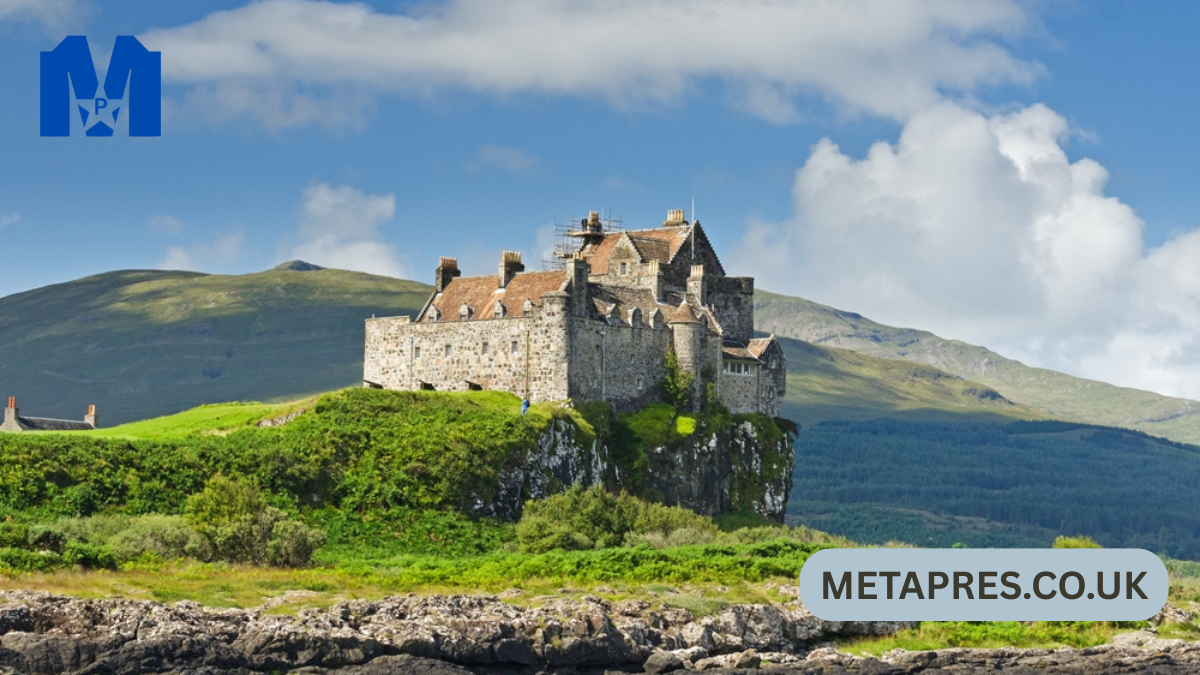
Few structures capture the essence of Clan Maclean quite like Duart Castle. Built on a rocky promontory overlooking the Sound of Mull, the castle served as both fortress and home. Its strategic location allowed the clan to monitor maritime traffic while presenting an imposing presence to friend and foe alike.
The architecture of Duart reflects centuries of adaptation. Early defensive features were designed to repel invaders, while later renovations introduced greater comfort and refinement. Yet even as it evolved, the castle retained its fundamental purpose: to protect the clan and embody its authority.
Beyond its physical strength, Duart became a cultural center. Gatherings, negotiations, and celebrations unfolded within its walls. Decisions made there influenced not only clan affairs but also regional politics. Today, the castle stands as a reminder that leadership is often anchored in place—geography shaping destiny as much as individual ambition.
Legendary Chiefs of Maclean of Duart
Throughout history, the strength of Clan Maclean often reflected the character of its chiefs. These leaders were more than administrators; they were symbols of unity whose actions shaped the clan’s identity.
One of the most notable figures was Lachlan Lubanach Maclean, credited with consolidating the clan’s influence during the late medieval period. His marriage into a powerful family expanded Maclean territory and reinforced alliances. Such strategic unions were common among Highland elites, but Lubanach executed them with particular foresight.
Later chiefs faced harsher challenges. Sir Lachlan Mor Maclean emerged as a formidable warrior during a time of intense rivalry. His leadership exemplified the Highland ideal of courage, yet it also underscored the constant danger chiefs faced. Battles were personal, and the loss of a leader could destabilize an entire clan.
These chiefs were not flawless heroes. They made difficult choices, sometimes sparking feuds that lasted generations. Yet their willingness to shoulder responsibility ensured the clan’s survival through turbulent centuries.
Clan Warfare and Rivalries
No discussion of Maclean of Duart would be complete without examining the conflicts that defined Highland life. Warfare was not always large-scale; often, it consisted of raids, skirmishes, and retaliatory strikes. Still, the cumulative effect of these confrontations shaped clan boundaries and reputations.
The Macleans’ rivalry with the Campbells became particularly consequential. As the Campbells gained favor with the Scottish crown, their influence expanded—often at the expense of neighboring clans. This imbalance introduced a political dimension to what might otherwise have remained localized disputes.
Yet the Macleans were never passive victims. They resisted encroachment fiercely, rallying allies and leveraging their maritime strength. These struggles demanded resilience, reinforcing a culture that prized loyalty and readiness. Even in defeat, the clan’s determination left a lasting impression on Highland history.
The Battle of Inverkeithing and Its Aftermath
The 17th century brought one of the most devastating moments in Maclean history: the Battle of Inverkeithing in 1651. Fought during the Wars of the Three Kingdoms, the battle pitted Royalist forces against the Parliamentarian army led by Oliver Cromwell.
Clan Maclean fought with remarkable bravery, reportedly forming protective circles around their chief. Many warriors sacrificed their lives in acts of extraordinary loyalty. While historians debate specific details, the overarching narrative remains clear—the clan suffered catastrophic losses.
The aftermath reshaped the Macleans’ future. Reduced manpower weakened their defensive capabilities, leaving them vulnerable to political and territorial pressures. Yet the memory of Inverkeithing also became a source of pride, symbolizing devotion that transcended personal survival.
Loss of Lands and Political Shifts
Following military setbacks, the Macleans faced mounting financial and political challenges. Debts accumulated, and adversaries capitalized on their weakened state. Over time, significant portions of Maclean land passed into Campbell hands, marking a turning point in the clan’s fortunes.
This loss was not merely economic; it carried emotional weight. Land represented heritage, identity, and continuity. To relinquish it felt like surrendering a piece of the clan’s soul. Chiefs struggled to navigate these realities, balancing dignity with pragmatism.
Yet history rarely follows a straight line. Even as their territorial control diminished, the Macleans maintained a strong communal identity. Traditions persisted, stories were preserved, and a sense of belonging endured—proof that a clan is more than the acreage it commands.
Cultural Identity and Traditions

What allowed Maclean of Duart to survive adversity was a deeply rooted cultural framework. Music, oral storytelling, and ceremonial gatherings reinforced shared values. Bagpipes echoed across hills, while poets immortalized clan deeds in verse.
Tartans and crests offered visible expressions of unity. These symbols communicated lineage and allegiance at a glance, particularly during times when literacy was limited. Wearing the clan tartan was both a statement of pride and a declaration of solidarity.
Religion also played a role in shaping identity. Churches and spiritual practices provided stability amid uncertainty. Through these traditions, the Macleans cultivated continuity, ensuring that each generation inherited not only a name but a legacy.
The Restoration of Duart Castle
By the 19th century, Duart Castle had fallen into disrepair—a poignant reflection of the clan’s earlier struggles. However, the story did not end there. Sir Fitzroy Donald Maclean undertook an ambitious restoration project, breathing new life into the historic stronghold.
This effort was more than architectural preservation; it represented a reclaiming of heritage. Restoring Duart signaled that the Maclean legacy remained relevant, worthy of investment and celebration. The castle once again became a focal point for clan gatherings.
Today, visitors often remark on the sense of continuity that permeates Duart. Walking its halls feels like stepping into a living narrative, where past and present coexist. The restoration stands as a testament to the idea that history, when cherished, can be revived.
Maclean of Duart in the Modern Era
Modern clan leadership differs significantly from its medieval counterpart. Chiefs no longer command armies or arbitrate territorial disputes. Instead, they serve as cultural ambassadors, fostering connections among descendants scattered across the globe.
Clan societies organize events, publish research, and encourage genealogical exploration. These initiatives help individuals rediscover their roots, transforming abstract ancestry into tangible understanding. For many, identifying with Maclean of Duart offers a sense of belonging that transcends geography.
Technology has amplified these efforts. Online archives, digital forums, and virtual gatherings allow members to engage with their heritage in ways previous generations could scarcely imagine. The clan has adapted to contemporary realities without abandoning its foundational values.
Genealogy and the Search for Ancestry
Interest in genealogy has surged in recent decades, and Clan Maclean is no exception. People often begin their search with little more than a surname, only to uncover intricate family networks stretching back centuries.
Tracing lineage can be both exhilarating and humbling. Records reveal migrations, marriages, and moments of hardship that shaped familial trajectories. For Maclean descendants, such discoveries frequently inspire a deeper appreciation for the resilience embedded in their heritage.
Yet genealogy is not solely about the past. It encourages reflection on identity and continuity. Understanding where one comes from can influence how one navigates the future, reinforcing the timeless relevance of clan history.
The Global Maclean Community
Emigration played a significant role in dispersing the Macleans beyond Scotland. Economic pressures, political upheaval, and the promise of opportunity drove many to North America, Australia, and elsewhere.
While distance altered daily life, it did not sever emotional ties. Immigrant Macleans carried traditions with them, adapting customs to new environments. Over time, these communities developed distinctive identities while remaining connected to their ancestral homeland.
Today, international gatherings highlight the clan’s remarkable reach. Participants share stories, celebrate heritage, and reaffirm bonds that span continents. Such events illustrate how legacy can flourish even when rooted in faraway soil.
Myths, Legends, and Folklore
Like all great clans, the Macleans are surrounded by stories that blur the line between history and legend. Tales of heroic last stands, cunning escapes, and prophetic dreams enrich the clan’s narrative tapestry.
Folklore serves an important function. It transforms historical figures into archetypes, offering moral lessons and reinforcing communal ideals. Whether entirely factual or embellished over time, these stories capture emotional truths about courage, loyalty, and perseverance.
Scholars often approach such legends with cautious curiosity, seeking kernels of authenticity while acknowledging the power of imagination. For the Macleans, these tales are not mere entertainment—they are threads that bind generations together.
Leadership Lessons from Maclean Chiefs
Examining the decisions of Maclean chiefs reveals insights surprisingly relevant to modern leadership. Adaptability emerges as a recurring theme. Chiefs who thrived were those willing to reassess strategies in response to changing circumstances.
Equally important was the ability to inspire trust. Clan members followed leaders into perilous situations because they believed in their judgment. This dynamic underscores a universal truth: authority without credibility is fragile.
Finally, the Macleans demonstrate the importance of long-term thinking. Strategic marriages, alliances, and investments in infrastructure like castles reflected a commitment to future stability. Contemporary leaders can draw valuable lessons from this forward-looking mindset.
Architecture and Daily Life in Clan Territory
While castles dominate popular imagination, most Macleans lived in modest dwellings scattered across fertile patches of land. Daily life revolved around agriculture, fishing, and craftsmanship—activities demanding cooperation and resourcefulness.
Communities were tightly knit. Neighbors relied on one another during harvests, storms, and celebrations alike. This interdependence strengthened social cohesion, making the clan more resilient in the face of external threats.
Meanwhile, Duart functioned as both administrative hub and refuge. In times of danger, families could seek protection within its walls. The castle thus symbolized not only authority but also collective security.
Women of Maclean of Duart
Historical narratives often spotlight male warriors, yet women played indispensable roles within the clan. Noblewomen facilitated alliances through marriage, managed estates during absences, and ensured the transmission of cultural practices.
Their influence extended into diplomacy. Correspondence and negotiations sometimes unfolded behind the scenes, guided by individuals whose contributions went underrecorded but were nonetheless pivotal.
Recognizing these women enriches our understanding of clan dynamics. Leadership was rarely solitary; it depended on networks of support that included voices often overlooked in traditional accounts.
Economic Foundations of Clan Power
Sustaining a clan required more than martial prowess. Economic stability formed the backbone of Maclean authority. Control of farmland, livestock, and maritime resources enabled the clan to support warriors and maintain infrastructure.
Trade also played a role. Exchanges with neighboring territories introduced goods and ideas, fostering a degree of cosmopolitan awareness despite geographic isolation. Chiefs who managed these resources effectively strengthened their political leverage.
However, economic missteps could prove disastrous. Debt and poor harvests undermined resilience, illustrating how financial stewardship was as critical as battlefield success.
Religion and Spiritual Life
Faith offered comfort and structure amid the uncertainties of Highland existence. Churches served as gathering places where spiritual guidance intertwined with social interaction.
Clergy often mediated disputes, reinforcing ethical norms that helped maintain order. Religious festivals provided moments of joy, punctuating routines shaped by labor and vigilance.
For the Macleans, spirituality was not separate from daily life—it was interwoven with identity. This integration contributed to the clan’s endurance, grounding members in shared beliefs.
Education and Intellectual Growth
Contrary to stereotypes of the Highlands as purely martial, intellectual pursuits held significance within the Maclean sphere. Literacy gradually expanded, enabling record-keeping and correspondence that enhanced administrative efficiency.
Education also facilitated engagement with broader Scottish society. As political structures evolved, the ability to navigate legal and bureaucratic systems became increasingly valuable.
This embrace of learning highlights the clan’s adaptability. Tradition and progress were not mutually exclusive; they complemented one another in shaping a sustainable future.
Tourism and Heritage Today
In the present day, interest in Highland heritage has fueled tourism across Scotland. Visitors drawn to Duart Castle often arrive with romantic expectations, yet leave with a deeper appreciation for the clan’s nuanced history.
Guided tours, exhibitions, and cultural programs transform abstract narratives into tangible experiences. Standing atop the castle ramparts, one can almost sense the watchful presence of generations past.
Tourism also supports preservation efforts, ensuring that historical sites remain accessible. In this way, curiosity becomes a partner in conservation, allowing the Maclean story to reach ever-wider audiences.
Why Maclean of Duart Still Matters
Some might wonder why a centuries-old clan continues to captivate modern imagination. The answer lies partly in the universality of its themes—identity, perseverance, and community.
The Macleans remind us that history is not static. It lives through memory, tradition, and ongoing engagement. Each descendant who explores their heritage contributes to an evolving narrative.
Moreover, the clan’s journey illustrates the power of resilience. Despite losses and transformations, the Macleans preserved a sense of purpose. Their story encourages reflection on how we confront challenges and honor our roots.
Conclusion: A Legacy Carved in Stone and Memory
Maclean of Duart represents more than a historical curiosity; it embodies a living heritage shaped by courage, adaptation, and enduring pride. From medieval ascendancy to modern revival, the clan’s trajectory reveals the complexities of leadership and belonging.
Duart Castle stands as a physical anchor for this legacy, yet the true strength of the Macleans resides in their people—past and present. Stories passed down through generations ensure that the clan’s spirit remains vibrant.
As we look back on their history, we find lessons applicable far beyond the Highlands. The Macleans teach us that while circumstances change, the values of loyalty, foresight, and unity remain timeless. Their legacy, carved into both stone and memory, continues to inspire those who seek connection with a past that still speaks powerfully today.
FAQs
Who are the Macleans of Duart?
The Macleans of Duart are the senior branch of Clan Maclean, historically based at Duart Castle on Scotland’s Isle of Mull.
Where is Duart Castle located?
Duart Castle sits on a rocky headland overlooking the Sound of Mull in western Scotland.
What does the name Maclean mean?
Maclean comes from “Mac Gille Eoin,” meaning “son of the servant of St. John.”
Why is the Battle of Inverkeithing important to the clan?
It marked a devastating loss for the Macleans but became a lasting symbol of loyalty and bravery.
Are there Maclean descendants outside Scotland?
Yes, many descendants live worldwide, particularly in North America and Australia.
Can people visit Duart Castle today?
Yes, the castle is open to visitors and serves as a cultural landmark for clan heritage.
What role does the clan chief have now?
Today’s chief acts mainly as a cultural figurehead who promotes heritage and unity.
Did the Macleans always control their lands?
No, political conflicts and debts led to significant land losses over time.
What tartan is associated with Clan Maclean?
Clan Maclean has several recognized tartans that symbolize lineage and pride.
Why is Clan Maclean still relevant today?
Its legacy offers insights into resilience, identity, and the enduring importance of community.
Also read: Map Firth of Clyde: A Complete Expert Guide to Scotland’s Iconic Coastal Waterway