
Tucked away in the rolling landscapes of North Yorkshire, England, Ebberston Hall is one of those country estates that every lover of British heritage should know about. Unlike the grander stately homes that dominate tourist guides, Ebberston Hall exudes a quiet charm, blending classical architecture with a serene countryside setting. Built in the early 18th century as a summer retreat, the hall has evolved over centuries yet retains its refined elegance.
The appeal of Ebberston Hall lies not in its size but in its proportion, balance, and the thoughtful relationship between building and landscape. Visitors and historians alike often note how the estate reflects broader trends in Georgian architecture while maintaining a distinct regional character. The hall demonstrates how even more modest estates were designed with artistic sensibilities in mind.
Beyond its architectural beauty, Ebberston Hall embodies a story of continuity and change. The estate reflects the lives of the families who shaped it, the evolving tastes of Georgian England, and the way landscapes were sculpted to complement refined country houses. It remains a quiet but compelling symbol of England’s heritage.
Where It All Began: The Origins of Ebberston Hall
The origins of Ebberston Hall date back to the early 18th century, a period when country estates were increasingly seen as symbols of taste, status, and leisure rather than merely agricultural holdings. Before the hall was constructed, the lands were part of older manorial estates with centuries of history embedded in the surrounding countryside. Archaeological evidence suggests that earlier settlements existed nearby, hinting at a rich tapestry of local history.
The estate came into prominence when a wealthy landowner purchased the property and envisioned a refined residence that would serve as a summer retreat. This ambition reflected the broader Georgian trend of country estates being used as leisure homes rather than purely functional spaces. The hall’s early design decisions illustrate how landowners sought harmony between architecture and nature.
From the beginning, Ebberston Hall was more than just a house; it was a statement. Its construction reflected the growing interest in classical ideals, symmetry, and proportion, demonstrating how architecture could express social aspiration and cultural engagement. These origins set the stage for the hall to become a notable example of early Georgian country homes.
Architectural Vision: A Classical Summer Retreat
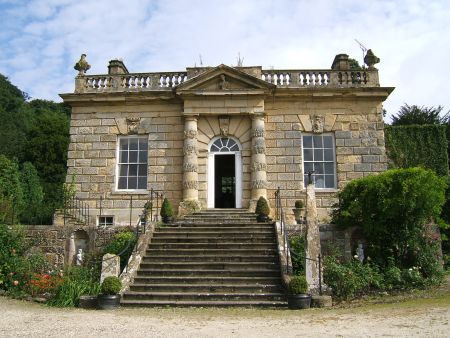
Ebberston Hall was designed with a clear classical influence, reflecting the principles of Palladian architecture popular in the early 18th century. Its symmetrical façade, sandstone construction, and elegantly framed windows give it a sense of order and balance. The entrance is subtly grand, with columns and pediments lending a dignified yet approachable appearance. The hall’s design prioritizes proportion and harmony over ostentation.
One of the estate’s standout features is its loggia, a three-bay gallery that originally connected the interior spaces with the surrounding landscape. This architectural choice demonstrates a key Georgian ideal: the blending of indoor comfort with outdoor beauty. Even when glazed in later years, the loggia maintained the visual and functional connection between house and garden.
Internally, the hall reflects the same classical sensibilities. Although privately owned, records and historic descriptions suggest that rooms were designed with symmetry and spaciousness in mind. Decorative details such as plasterwork and molding likely echoed the understated elegance of the exterior, creating a cohesive aesthetic that exemplified Georgian taste.
Landscape and Water Gardens: Designing with Nature
Ebberston Hall’s setting is integral to its character. The estate was carefully landscaped to harmonize with its rolling North Yorkshire surroundings, incorporating formal gardens, water features, and pathways that guide visitors through a series of scenic views. Water, in particular, played a central role, with channels and cascades creating reflective surfaces and gentle movement that enhanced the sense of tranquility.
Paths meander through woodlands and open spaces, designed to offer alternating vistas of the hall and the surrounding countryside. The placement of trees, flowerbeds, and lawns was carefully considered to frame perspectives, creating both intimate and expansive experiences. This approach mirrors broader Georgian garden philosophy, emphasizing harmony between human-made structures and the natural environment.
The estate’s pleasure grounds reflect both artistry and practicality. Water management, tree placement, and garden structures were all planned to maximize beauty while maintaining ecological balance. Visitors walking through the gardens experience the same thoughtful planning that the original designers intended, with every turn revealing a new interplay between form, texture, and light.
Ownership Through the Ages: Families Who Shaped the Estate
The story of Ebberston Hall is inseparable from the families who owned it. Each generation contributed to the estate’s evolution, leaving marks on architecture, gardens, and local community life. Early owners commissioned the hall as a summer retreat, while subsequent generations modified interiors, added structures, and maintained the grounds in line with evolving tastes.
In the 19th century, notable owners included individuals deeply involved in regional and national affairs. Some were celebrated for their sporting achievements and social influence, adding layers of cultural richness to the estate. Later owners were equally dedicated to preserving the hall, rescuing it from periods of neglect and restoring architectural and landscape features.
The cumulative effect of these stewardship efforts is an estate that blends historical authenticity with practical adaptation. Ebberston Hall illustrates how careful, attentive ownership can preserve heritage while allowing it to remain a living, functional space across centuries.
Cultural and Architectural Context
Ebberston Hall embodies broader cultural and architectural trends of early Georgian England. During this period, country houses increasingly reflected intellectual engagement with classical antiquity. Palladian principles, emphasizing symmetry, proportion, and harmony, influenced architects and landowners alike, shaping not only major urban mansions but also rural estates like Ebberston.
While modest in scale compared with some grand country houses, Ebberston reflects a sophisticated understanding of architectural ideals. Its loggia, pediments, and proportioned façades showcase Palladian influence, while also adapting to local materials and landscapes. This combination of high-style design and regional sensitivity makes the hall a significant example of its period.
Beyond aesthetics, the estate illustrates cultural priorities of the Georgian era, including the cultivation of leisure, art, and landscape design. Ebberston Hall demonstrates how architecture and environment can articulate values, identity, and taste in a way that resonates across centuries.
Architectural Details and Interior Nuances
A closer look at Ebberston Hall reveals meticulous craftsmanship. Stonework, rustication, cornices, and pilasters contribute to a façade that balances ornamentation with restraint. Windows and doorways are carefully proportioned, adding depth and elegance without overpowering the hall’s harmonious appearance.
Inside, the layout likely emphasizes symmetry and order. Reception rooms would have been designed for entertaining and social engagement, with attention to decorative plasterwork, moldings, and ceiling details. While some modifications occurred over time, the integrity of the hall’s classical vision remains evident in spatial arrangements and stylistic choices.
Small architectural features, from decorative urns to balustrades, enhance the hall’s visual appeal. These details demonstrate the holistic approach of Georgian design, where every element contributes to a coherent aesthetic that reflects taste, refinement, and attention to detail.
Ebberston Hall in the North Yorkshire Landscape
The hall is more than an isolated architectural object; it sits within a broader cultural and natural landscape. The surrounding village, farmland, and church all interact with the estate, creating a sense of rootedness and continuity. Pathways and former entrances show how villagers, workers, and visitors historically engaged with the estate.
North Yorkshire’s rolling hills and valleys provide a stunning backdrop, enhancing the hall’s visual and emotional impact. The careful alignment of gardens and vistas with the surrounding terrain demonstrates the integration of architecture and landscape, a hallmark of Georgian country estates.
The estate also serves as a historical anchor for the region, reflecting centuries of social, economic, and environmental change. It stands as a testament to the way architecture can shape and be shaped by its setting, creating a dialogue between human design and natural beauty.
Preservation and the Future
Like many historic estates, Ebberston Hall faces preservation challenges. Garden features, water channels, and structures require ongoing care to maintain their historic character. Despite these challenges, dedicated owners have ensured that the hall remains largely intact, balancing conservation with practical use.
The estate’s survival highlights the importance of stewardship in heritage preservation. It demonstrates that even smaller, less-famous country houses can serve as valuable repositories of architectural and cultural history. Continued attention to both structure and landscape ensures that Ebberston Hall can be appreciated by future generations.
Preservation efforts also underscore the role of community and local heritage initiatives. Though public access is limited, research, documentation, and regional engagement contribute to awareness and appreciation, securing the hall’s legacy for the 21st century and beyond.
Ebberston Hall: A Legacy Worth Remembering
In a nation rich with historic estates, Ebberston Hall may not dominate headlines, but its story is no less remarkable. It embodies classical architectural principles, sophisticated landscape design, and a tangible connection to regional history. Its modest size belies its significance as an example of Georgian taste adapted to rural settings.
The hall reminds us that history is not only about grandeur but also about careful design, continuity, and the interplay between human endeavor and natural surroundings. Ebberston Hall represents an enduring testament to the value of thoughtful architecture and landscape planning, preserving cultural memory while remaining a living part of its community.
Frequently Asked Questions (FAQs)
What is Ebberston Hall? It is an 18th-century country house in North Yorkshire built as a classical summer retreat.
Who designed Ebberston Hall? The hall was designed in the early 1700s by a Scottish architect influenced by Palladian principles.
Where is Ebberston Hall located? In the village of Ebberston, near Pickering in North Yorkshire, England.
Is Ebberston Hall open to the public? No, it is privately owned and not generally open for public tours.
What architectural style is Ebberston Hall? It reflects Georgian Palladian and classical influences.
Are the gardens historically significant? Yes, they feature early 18th-century landscaping, water channels, and formal vistas.
Also read:British Train Types: A Complete Guide