
Introduction to Full Bore Shooting
Full bore shooting is one of the most respected and technically demanding disciplines in the world of target shooting. It focuses on precision, consistency, and mastery of long-distance marksmanship using high-powered rifles. Unlike casual shooting activities, full bore shooting is deeply rooted in tradition, discipline, and competitive excellence, making it a favourite among serious marksmen around the world.
At its core, full bore shooting involves firing rifles at targets placed at long distances, typically ranging from 300 to 1,000 yards. The challenge lies not just in hitting the target, but in achieving tight groupings under varying environmental conditions such as wind, light, and temperature. These external factors play a significant role, and learning to read and adapt to them is what separates beginners from experts.
What makes full bore shooting particularly fascinating is the balance between science and skill. Shooters must understand ballistics, rifle mechanics, and environmental influences while also maintaining perfect body control and mental focus. It is a discipline that rewards patience and punishes carelessness, making it both challenging and highly satisfying for those who pursue it seriously.
History and Evolution of Full Bore Shooting
Full bore shooting has a rich and storied history that dates back to the 19th century. It originated in military training exercises, where soldiers needed to develop accurate long-range shooting skills. Over time, these training practices evolved into competitive events, giving rise to organised shooting competitions.
One of the earliest and most influential developments in full bore shooting was the establishment of formal competitions in the United Kingdom. These competitions laid the groundwork for standardised rules, target designs, and shooting distances. As the sport grew in popularity, it spread to other parts of the world, including Australia, Canada, and South Africa.
Throughout its evolution, advancements in rifle technology and ammunition have significantly impacted the sport. Early rifles were relatively simple compared to modern precision-engineered firearms. Today, shooters benefit from highly accurate rifles, advanced optics, and specialised ammunition designed for consistency and performance. Despite these technological improvements, the fundamental skills required for full bore shooting remain unchanged, emphasising the shooter’s ability over the equipment.
Equipment Used in Full Bore Shooting
Full bore shooting requires specialised equipment designed for long-range accuracy and consistency. The most important piece of equipment is the rifle, which is typically a high-powered bolt-action firearm chambered in calibres such as .308 Winchester or similar. These rifles are known for their reliability, precision, and suitability for long-distance shooting.
Ammunition plays an equally critical role in full bore shooting. Shooters often use carefully selected or even custom-loaded rounds to ensure consistent performance. Factors such as bullet weight, shape, and velocity must be carefully considered, as they directly influence accuracy and trajectory.
In addition to the rifle and ammunition, shooters rely on a variety of accessories to enhance their performance. These include shooting mats, slings, spotting scopes, and hearing protection. Each piece of equipment serves a specific purpose, helping the shooter maintain stability, observe target impacts, and ensure safety during practice and competition.
Shooting Positions and Techniques
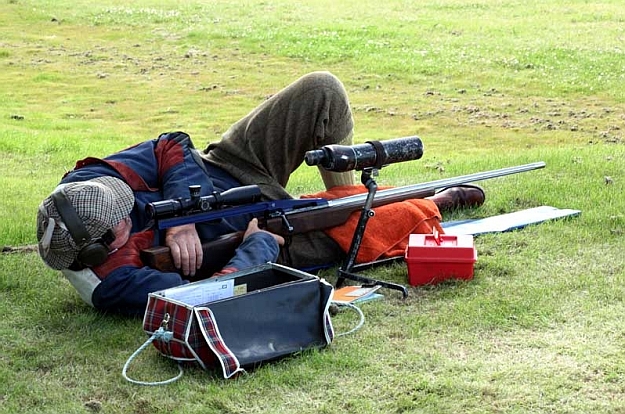
Mastering shooting positions is essential for success in full bore shooting. The most commonly used position is the prone position, where the shooter lies flat on the ground with the rifle supported by a sling. This position provides maximum stability and allows for precise control of the rifle.
In the prone position, proper body alignment is crucial. The shooter must position their body directly behind the rifle, ensuring that recoil is absorbed evenly. This alignment helps maintain consistency between shots and reduces the likelihood of errors caused by movement or instability.
Breathing control and trigger discipline are also key components of effective shooting technique. Shooters are trained to control their breathing and fire the shot during a natural pause, minimising movement and improving accuracy. Similarly, a smooth and consistent trigger pull is essential to avoid disturbing the rifle’s alignment at the moment of firing.
Understanding Ballistics in Full Bore Shooting
Ballistics is a fundamental aspect of full bore shooting, and understanding it is essential for achieving accuracy at long distances. Ballistics refers to the behaviour of a bullet as it travels from the rifle to the target, including factors such as velocity, trajectory, and wind drift.
One of the most important concepts in ballistics is bullet drop. As a bullet travels through the air, gravity causes it to drop over distance. Shooters must compensate for this drop by adjusting their aim or using calibrated sights. The ability to accurately predict bullet drop is a key skill in full bore shooting.
Wind drift is another critical factor that affects bullet trajectory. Even a slight breeze can push a bullet off course, especially at long distances. Experienced shooters learn to read wind conditions by observing flags, vegetation, and other indicators. This skill requires practice and experience, as wind conditions can change rapidly and unpredictably.
The Role of Wind and Weather Conditions
Weather conditions play a significant role in full bore shooting, making it a sport that requires adaptability and awareness. Wind is perhaps the most challenging factor, as it can vary in speed and direction across the shooting range. Shooters must constantly assess wind conditions and adjust their aim accordingly.
Temperature and humidity also affect shooting performance. Changes in temperature can influence the velocity of the bullet, while humidity can impact air density and resistance. Although these factors may seem minor, they can have a noticeable effect on long-range accuracy.
Light conditions are another important consideration. Variations in sunlight can affect visibility and the appearance of the target. Shooters must learn to adapt to different lighting conditions, ensuring that they maintain a clear and consistent sight picture regardless of the environment.
Training and Practice for Full Bore Shooting
Becoming proficient in full bore shooting requires dedicated training and consistent practice. Shooters must develop a deep understanding of their equipment, refine their technique, and build the mental discipline needed to perform under pressure.
Practice sessions often focus on specific aspects of shooting, such as improving groupings, mastering wind reading, or refining trigger control. By breaking down the skill into smaller components, shooters can identify areas for improvement and track their progress over time.
Mental training is equally important in full bore shooting. Maintaining focus and composure is essential, especially during competitions where pressure can affect performance. Techniques such as visualisation and controlled breathing can help shooters stay calm and focused, enabling them to perform at their best.
Competitive Full Bore Shooting
Full bore shooting is a highly competitive sport with events held at local, national, and international levels. Competitions typically involve shooting at targets placed at varying distances, with points awarded based on accuracy and consistency.
One of the defining features of competitive full bore shooting is its emphasis on fairness and precision. Strict rules govern equipment, shooting positions, and scoring, ensuring a level playing field for all participants. These rules also help maintain the integrity of the sport.
Competitors often form strong communities, sharing knowledge and supporting each other’s development. This sense of camaraderie is an important aspect of full bore shooting, making it not only a competitive pursuit but also a social and collaborative activity.
Safety in Full Bore Shooting
Safety is a top priority in full bore shooting, and strict protocols are followed to ensure the well-being of all participants. Shooters are trained to handle firearms responsibly, adhering to established safety guidelines at all times.
Basic safety rules include keeping the rifle pointed in a safe direction, ensuring that it is unloaded when not in use, and wearing appropriate protective equipment. These practices are essential for preventing accidents and maintaining a safe shooting environment.
Range safety officers play a crucial role in overseeing shooting activities and enforcing safety rules. Their presence ensures that all participants follow proper procedures, creating a controlled and secure environment for training and competition.
Benefits of Full Bore Shooting
Full bore shooting offers a range of benefits beyond the thrill of competition. It promotes discipline, patience, and focus, qualities that can be applied to many areas of life. The sport also encourages critical thinking and problem-solving, as shooters must constantly analyse conditions and make adjustments.
Physical benefits include improved posture, stability, and coordination. While full bore shooting may not be physically intense, it requires precise control and endurance, particularly during extended practice sessions.
Additionally, full bore shooting provides a sense of achievement and personal growth. Progress in the sport is measurable, allowing shooters to track their improvement and set new goals. This sense of accomplishment can be highly motivating and rewarding.
Common Mistakes and How to Avoid Them
Even experienced shooters can make mistakes, and recognising these errors is essential for improvement. One common mistake is inconsistent body positioning, which can lead to variations in accuracy. Ensuring proper alignment and stability is key to achieving consistent results.
Another frequent issue is poor trigger control. Jerking the trigger or applying uneven pressure can disturb the rifle’s alignment, resulting in inaccurate shots. Practising smooth and controlled trigger pulls can help eliminate this problem.
Failure to account for environmental factors is also a common mistake. Ignoring wind or weather conditions can significantly impact accuracy. Developing the ability to read and respond to these factors is crucial for success in full bore shooting.
Future of Full Bore Shooting
The future of full bore shooting looks promising, with continued advancements in technology and growing interest in the sport. Modern equipment and training methods are making it more accessible to newcomers, while experienced shooters continue to push the boundaries of precision and performance.
Digital tools and data analysis are becoming increasingly important, allowing shooters to track their performance and make informed adjustments. These innovations are enhancing the training process and helping shooters achieve higher levels of accuracy.
Despite these advancements, the essence of full bore shooting remains unchanged. It continues to be a discipline that values skill, dedication, and respect for tradition, ensuring its enduring appeal for generations to come.
Conclusion
Full bore shooting is a challenging and rewarding discipline that combines technical knowledge, physical control, and mental focus. Its rich history, competitive spirit, and emphasis on precision make it a unique and respected sport.
Whether pursued as a hobby or a competitive endeavour, full bore shooting offers valuable lessons in discipline, patience, and perseverance. By mastering the fundamentals and continuously striving for improvement, shooters can experience the satisfaction of achieving excellence in this demanding field.
The journey in full bore shooting is one of constant learning and growth. With dedication and practice, anyone can develop the skills needed to succeed and enjoy the many benefits that this remarkable sport has to offer.
FAQs
What is full bore shooting?
Full bore shooting is a long-range rifle shooting discipline focused on accuracy at distances typically between 300 and 1,000 yards.
Which rifle is used in full bore shooting?
High-powered bolt-action rifles, commonly chambered in calibres like .308 Winchester, are used.
Is full bore shooting difficult for beginners?
Yes, it can be challenging initially due to the need for precision and understanding of environmental factors.
Why is wind important in full bore shooting?
Wind can significantly alter the bullet’s path, making it essential to read and adjust for it.
Can anyone learn full bore shooting?
Yes, with proper training, guidance, and practice, anyone can learn the fundamentals.
What is the most common shooting position?
The prone position is the most commonly used for stability and accuracy.
How long does it take to become skilled?
It varies, but consistent practice over months or years is typically required.
Is full bore shooting safe?
Yes, when proper safety rules and protocols are strictly followed.
Do professionals use special ammunition?
Yes, many use carefully selected or custom-loaded ammunition for consistency.
What makes full bore shooting unique?
Its focus on long-range precision, environmental awareness, and disciplined technique makes it unique.
Also read:Cusop Dingle: A Complete Expert Guide to This Hidden Natural Gem in England